Thursday, April 21, 2016

Ещё раз о рейтинге самых распространенных фамилий Европы


Составитель этой чудо-карты чешский лингвист Якуб Мариан сильно удивил. Например, оказалось, что в России (которая испокон веков держалась на Ивановых) больше всего людей по фамилии Смирнов. Неужели же революции, войны и неудачные реформы сломили-таки хребет русскому народу и он смирился со своей участью?


http://zampolit-ru.livejournal.com/7096271.html

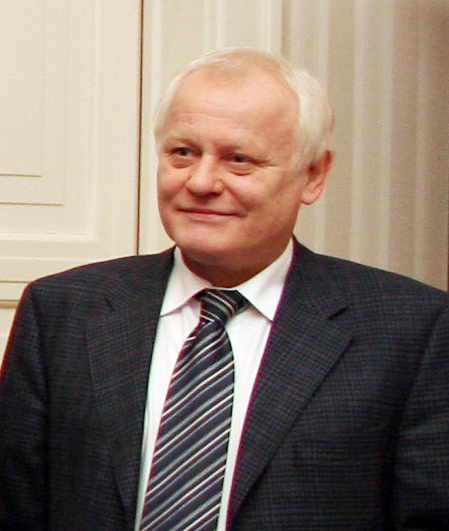
Комментирует  ситуацию доктор  филологических наук Анатолий Журавлев, заведующий отделом этимологии и ономастики Института русского языка РАН (ономастика это раздел языкознания, изучающий имена собственные).


ТАЙНА ИВАНА СУСАНИНА

- У меня это работа большого доверия не вызывает, - говорит Анатолий Федорович. - Мариан берет сведения из самых разношерстных источников. И совершенно непонятно, каким способом были получены эти результаты. Я вовсе не уверен, что на Украине фамилия Мельник в самом деле занимает лидирующие позиции, опережая, скажем, Шевченко, Коваленко, Кравченко, Ткаченко или Бойко. Разные источники, основанные на переписях, дают значительное расхождение. Применительно к четырёхъязычной Швейцарии автор выловил сведения только о немецких и итальянских фамилиях. При этом фамилия Бьянки в Швейцарии «соперничает» по встречаемости с Мюллер, хотя италошвейцарцев в стране всего 10%! Тут у Мартина явно плохо с математикой...

- По России Мариан вывел в чемпионы Смирнова. Он опирался на некоторые российские исследования. Но ряд отечественных лингвистов отдает пальму первенства все же Ивановым. В чью пользу аргументов больше?

- В пользу Ивановых. Мы составляли список из 500 наиболее часто встречающихся русских фамилий. Статистика строилась на относительно небольшом материале. Обсчитывали телефонные справочники некоторых городов России, библиотечные каталоги, списки абитуриентов нескольких московских вузов и т.д. По нашим данным первая тройка это Иванов, Смирнов и Кузнецов (см. ТОП-20).

- Почему фамилия Смирнов получила такое распространение? Ведь это производное от качества, которое вроде бы не в русском характере...

- Фамилия производна от прозвища Смирной, дававшегося, скорее всего, неплаксивому младенцу. В условиях деревни домашнее прозвище дитяти быстро выходило за пределы семьи и становилось достоянием окружения. Следует добавить, что фамилия Смирнов распространена в России неравномерно, преобладая в северном Поволжье. Там она кое-где опережает по встречаемости фамилию Иванов.

- Говорят, что крестьяне в старину не имели фамилий. А как же Иван Сусанин?

- Это, видимо, не фамилия, а прозвище, причем от материнского имени Сусанна (на этом основании возникла версия, что у Ивана Сусанина не было отца, отсюда и такая странная «фамилия» - авт.). Помню, в Гурзуфе, откуда я родом, лет десять-пятнадцать назад появилась улица Никитина. Туземцы долго не могли понять, кто таков. А это купец Афанасий Никитин, ходивший «за три моря», в Индию (на обратном пути он укрывался от бури в Гурзуфском заливе). Но на самом деле Никитин у него— не фамилия, а отчество. Чиновники просто этого не знали. Следовало назвать «улица Афанасия Никитина» (де-факто «Афанасия Никитича бесфамильного»). Так же и с Сусаниным. В старину наша ситуация напоминала исландскую; там «фамилии» могут присваиваться только знаменитостям — писателям, актёрам, и я не уверен, что они передаются детям. У русских родовые имена, сходящиеся с современными фамилиями, были, но лишь в родовитых семьях (начиная с Рюриковичей). И это было скорее уважительной традицией, чем прямым законодательством.

ОТКУДА В СТРАНЕ ДУРАКОВЫ

- Ругательные фамилии Дураков, Злыднев, Гадючкин и т.д. Они откуда появились? Даны в наказание? Разве кто-то по своей воле мог взять такую фамилию?

- Фамилии вроде Дураков не обязательно отсылают к действительным свойствам носителей (точнее, их предков). Дохристианские имена Дурак, Страх, Жаба, Нелюб(а), Некрас, Оболдуй, Негодяй могли даваться как отпугивающие злых духов, охраняющие дитя от внимания нечистой силы. Эстетика имени собственного такие нелицеприятные именования допускала.

- Среди лидеров нашего государства много людей с фамилией на -ин. Ленин, Сталин, Ельцин... Это о чем-то говорит специалистам?

- Думаю, это случайность. Тем более, что Ленин и Сталин — это подпольные клички, а не фамилии в подлинном качестве. Со Сталиным и так все понятно. Ленин — фамилия актёрская, скорее дурновкусный псевдоним, от женского уменьшительного имени, как Катин, Анин, Светин, Лялин. А вовсе не от великой сибирской реки и тем более не в память о Ленском расстреле. Были о обратные примеры: Скряб-ин переименовался в Молот-ов-а. Так что тенденции тут не просматривается.

ТОП-20 русских фамилий

1. Иванов 1.000*
2. Смирнов 0,7421
3. Кузнецов 0,7011
4. Попов 0,5334
5. Васильев 0,4948
6. Петров 0,4885
7. Соколов 0,4666
8. Михайлов 0,3955
9. Новиков 0,3743
10. Федоров 0,3662
11. Морозов 0,3639
12. Волков 0,3636
13. Алексеев 0,3460
14. Лебедев 0,3431
15. Семенов 0,3345
16. Егоров 0,3229
17. Павлов 0,3226
18. Козлов 0,3139
19. Степанов 0,3016
20. Николаев 0,3005

* - коэффициент встречаемости. Условно говоря, на 1000 Ивановых приходится 742 Смирнова, 701 Кузнецов и т.д.

(По данным Института русского языка РАН)

ИЗ ИСТОРИИ ВОПРОСА

Царская династия Кобылиных-Кошкиных

Первыми на Руси обзавелись фамилиями граждане Великого Новгорода. Самое раннее упоминание русских фамилий относится к 1240 году, когда летописец среди погибших в Невской битве воинов Александра Ярославича называет имена «Костянтинъ Луготиниць, Гурята Пинещиничь». Затем в XIV—XV веках появляются фамилии у московских удельных князей и бояр. Фамилии образовывались либо от названия удела (Воротынский, Оболенский, Вяземский) или от прозвища. Но и тут все было довольно запутанно. Так царская династия Романовых лишь чудом в последний момент обзавелась благозвучным «брендом». А была велика вероятность, что Россией правили бы представители царского дома Кобылиных-Кошкиных. Основателями рода Романовых были жившие в XIV веке Андрей Иванович Кобыла и Фёдор Андреевич Кошка Кобылин. Значительно позднее Романовичами стали звать Анастасию (первую жену Ивана Грозного) и ее брата Никиту. Звали, естественно в честь их отца Романа. А уже потомки Никиты обрели фамилию Романовы...
Крестьяне до XIX века фамилий не имели. За исключением жителей северной России, бывших новгородских земель. Например, Михайло Ломоносов приехал в Москву уже с фамилией. Фамилиями обзаводились и в относительно независимых казачьих поселениях. А большинство крестьян Центральной России получило фамилии только после отмены крепостного права в 1861 году. Однако у большинства деревенских жителей существовали «уличные» прозвища. Ведь надо было односельчанам как-то различать друг от друга многочисленных Иванов или Николаев? И зачастую наделение фамилией сводилось к официальному признанию уличного прозвища.

Wednesday, April 20, 2016

Call for papers "Asiatische Onomastik"


Asiatische Onomastik

(Onoma 52)

ERSTER CALL FOR PAPERS


Liebe Kolleginnen und Kollegen,

ich freue mich sehr, auf Einladung des Herausgeberkomitees von Onoma die Gastherausgeberschaft des Heftes 52 übernehmen zu dürfen. Dieses Sonderheft wird die Onomastik in Asien zum thematischen Schwerpunkt haben. Soweit ich es verstehe, steht diese thematische Ausrichtung im Kontext der Öffnung von Onoma für globale Kontexte. Die meisten von Ihnen erinnern sich gewiss an das Sonderheft ‚Afrikanische Onomastik‘, das unter der Nummer 44 im Jahr 2009 herausgegeben wurde.  

Das Forschungsgebiet der asiatischen Onomastik bietet eine breite Palette an möglichen Themen. Im ostasiatischen Kulturraum, einschließlich Korea, China, Japan, Taiwan und sogar Vietnam, wurden Han-Zeichen () verwendet, die im kontinentalen Ostasien zur Verschriftlichung der entsprechenden Sprachen entwickelt wurden. Ostasiatische Eigen­namen, sowohl Orts- als auch Personennamen, teilen folglich viele Gemeinsamkeiten. Die Regionen in Südostasien wie Thailand, Malaysia, Indonesien, Singapur und die Philippinen zeichnen sich durch ihre eigenen Benennungspraktiken aus, die sich von deren einzigartigen Sprachen und Kulturen herleiten.

Im Sonderheft mit dem Titel ‚Asiatische Onomastik‘ können alle möglichen Themen mit Bezug zu Namen in Asien behandelt werden. Schon allein einführende Artikel über die Beschaffen­heit und Eigenschaften von Namen in Asien wären eine lohnenswerte Aufgabe. Ich hoffe jedoch, Texte zu spezifischeren Aspekten zu erhalten:

·          sprachliche Struktur und Eigenschaften von Namen,

·          Benennung als Reflexion von Kulturen und Mentalitäten,

·          Perzeption von Orten und deren Namen,

·          Namen und soziale Verhältnisse,

·          Streit, Konflikte, Diskussionen und Auseinandersetzungen über Benennung,

·          wirtschaftliche Dimension von Namen,

·          Forschungsmethoden in der asiatischen Onomastik, sowie

·          Standardisierung von geographischen Namen

Artikel zu weiteren Themen, welche die vorliegende Liste noch vervollständigen würden, sind selbstverständlich ebenfalls willkommen.

Das Sonderheft wird im Jahr 2017 veröffentlicht. Interessenten schicken bitte einen einseitigen Abstract mit Kurzangaben zum Artikelinhalt bis zum 30. Juni 2016 an meine E-Mail-Adresse. Auf der Grundlage der eingereichten Abstracts wird eine Auswahl getroffen. Autoren der angenommenen Vorschläge werden Hinweise zu weiteren Schritten erhalten. Fertige Artikel sind bis zum 1. Februar 2017 einzureichen.

Prof. Peter Kang (National Dong Hwa University, Taiwan) und Prof. Multamia Lauder (University of Indonesia) werden als Mitherausgeber fungieren.

Abstracts und Artikel müssen auf Englisch, Französisch oder Deutsch verfasst werden.

Ich bin gespannt auf Ihre Vorschläge.

Mit besten Grüßen,

Sungjae CHOO

Gastherausgeber, Onoma 52

Professor, Kyung Hee University

Seoul 02447

Korea

Monday, April 18, 2016

Research fellowship for "Literary ‘archaeology’ of the Historia Augusta: onomastic, toponomastic, and institutional studies between text and history"

http://ec.europa.eu/euraxess/index.cfm/jobs/fgDetails/97757

Rep. n. 209/2016 Prot. n. 16581-III/13  del 13/04/2016  

CALL FOR APPLICATIONS: SELECTION PROCEDURE FOR SPECIFIC PROJECT 

Call for applications toward research fellowships  for specific research programmes pursuant to art. 7 of the Regulations on research fellowships awarding  

UNIVERSITA’ CA’ FOSCARI VENEZIA DEPARTMENT OF HUMANITIES 


The Director of the Department of Humanities


establishes the following:  

Art. 1 - Scope  

1. A public selection is announced  for the awarding one research fellowship lasting 12 months, with the possibility of renewal within the limits of art.

2 of the Regulations on university research fellowship awarding, which will be subject to a specific contract. 

The expected starting date is June 2016 .

The research fellowship amounts to Euro 19.367,00 per year gross to the recipient, net of the expenses to be sustained by the Provider. The amount may be subject to adjustment in the event of variations in the law. 

The research fellowship is awarded for the purpose of collaboration with the following research programme:    

title: Literary ‘archaeology’ of the Historia Augusta: onomastic, toponomastic, and institutional studies between text and history 

scientific disciplinary sector: L-ANT/03 – Roman history; L-FIL-LET/04 – Latin language and literature 

scientific coordinator and tutor: dott. Lorenzo Calvelli  

duration: 12 months 

abstract: On the basis of the studies that in the early XXth century Alfred von Domaszewski published on Roman place names and onomastics in the Historia Augusta, the research project aims to widen the analysis, which involves the major issue of the chronology of the Vitae, and to give a useful contribution to such a long-standing dispute. On the one hand, it aims to reassess if, and to what extent, names of places, individuals and even institutions in the Historia Augusta correspond to the actual historical context they refer to, by the comparison with literary sources even through digital textual research tools now available, and in the light of historical documents of new acquisition. On the other hand, it aims to provide an in-depth analysis of the literary level, with special reference to the historical and ideological context and cultural milieu in which the final redaction of the Historia Augusta took place.

3. The selection aims to ascertain the scientific-professional requirements deemed necessary  for carrying out  the above research activities.  


Art. 2 – Requirements for participation in selection procedure 

1. Citizens belonging to European Union member states and non-community citizens in possession of the following qualifications may take part in the selection:  

-  PHD in Classics (with dissertation in Roman History or Latin Literature) and appropriate scientific-professional curriculum for the research 

2. Qualifications obtained abroad will be examined by the Committee, in accordance with the following article 4, which may consider them as being equivalent for the purposes of admission, without prejudice to the current laws (for further information see http://cimea.it/default.aspx?IDC=129). 

3. Candidates must be in possession of the requirements at the deadline established by this selection procedure announcement (see art. 3, par. 2).

4. The following are not eligible for fellowships and are therefore automatically excluded from participation in the selection procedures: persons who have a degree of kinship or affinity, up to and including the fourth degree, with a professor belonging to the department or to the facility issuing the call for applications, or with the Vice Chancellor, the DirectorGeneral or a member of the University Board of Directors. 

5.  The following are not eligible for fellowships: permanent employees of the universities, public research institutions and bodies, the National Council for New Technology,  Energy and the Environment (ENEA) and the Italian Space Agency (ASI), institutions whose scientific specialisation diploma has been recognised equivalent to the title of PhD in accordance with article 74, fourth paragraph, of the Presidential Decree of July 11th 1980, no. 382, in accordance with the relative budget availability. 

6. Private employees can’t be grant holders. 

7. Candidates are admitted to the selection conditionally; the University will exclude, by motivated provision, candidates who are lacking the prescribed requirements. Said provision is notified to the party concerned by registered letter with recorded delivery or by telegram on the request of the party concerned.

8. In any case the grant will be awarded having regard to the art. 18 of the regulation on the research fellowship. 

Art. 3 – Application for participation in the selection and term
  

1. In order to participate in the selection procedure, the candidate must submit an application with all the required documents in accordance with the Regulations on research fellowship awarding and the following paragraphs.  

2. The application form, available on the University web page (link), must be filled in, dated, signed, addressed and submitted, together with all the required documents to the Director of the Department of Humanities, Università Ca’ Foscari  Venezia, at Palazzo Malcanton Marcorà, 2° flat, Dorsoduro 3484/D, 30123 Venezia, by and no later than 20 days from the date of affixing on the official notice board and publication of this announcement in the University web pages, in the web pages of the MIUR (Ministry of Education, Universities and Research) http://bandi.miur.it/bandi.php/public/cercaFellowship and European Union  http://ec.europa.eu/euraxess/index.cfm.  Failing that, the candidate will be excluded from the selection. The deadline for submission of applications and relative documentation is May 4th 2016, at 12 a.m. (Italian hour). If the deadline is on Saturday or on holidays, the deadline is extended to the first working day thereafter.  

3. The application form in the selection procedure is available in the web page of this University (link). 

4. In the application the candidate must clearly specify the title of the research fellowship for which s/he wishes to be selected.  

5. The documented application can be delivered by hand to the secretariat of the organization structure, Department of Humanities, Università Ca’ Foscari  Venezia, at Palazzo Malcanton Marcorà, 2° flat, Dorsoduro 3484/D, 30123 Venezia, at the following times:

DAY                   from              to

Monday to Friday       8.30 a.m.       2.00 p.m. 

6. The complete application can also be forwarded by post, through registered letter with recorded delivery (see previous par. 2).  In this case, the proof of receipt will not be the mailing postmark but the date of receipt by the Administration, which must be by and no later than the deadline for the selection procedure

7. Applications can also be sent by certified email to the certified email address  of Ca’ Foscari University, Venice: protocollo@pec.unive.it by the above-mentioned term. The application must be sent only from another certified email address. In the email’s subject sent to the certified email address, specified above, please indicate [Research fellowship – Department of Humanities  – Literary ‘archaeology’ of the Historia Augusta]. 

8. Applications can also be sent by e-mail to ricerca.dsu@unive.it. In the subject of the email sent to the email address, specified above, please indicate [Research fellowship – Department of Humanities  – Literary ‘archaeology’ of the Historia Augusta]. 

9. The email and certified email must contain:

a. application form; 

b. declarations pursuant to the DPR 445/2000  duly signed, accompanied by a copy of a valid identity document scanned in PDF format;

c. further attachments (see par. 19 this article), also sent exclusively in PDF format.  

Transmission of the above-mentioned documentation in different formats (e.g. .doc, .xls) exclude the application from the selection.

10. Applications can also be sent by the online application procedure, if available in the call fiche web page: http://static.unive.it/domandeconcorso-en/accesso/dsu-dd209-16581.  The application form in the selection procedure is available in the web page of this University (link).

The candidate, after the uploading, will receive a submission number and an e-mail acknowledging receipt of his/her application.  The candidate if necessary could access the procedures for updating any data and materials by the link privided by the e-mail, in any case any updates must be made no later than the deadline May 4th 2016, at 12 a.m.(Italian hour). Please note that the University can be contacted for any support needs by the candidate until May 4th 2016, at 10 a.m.(Italian hour). Please note that in case of an high number of applications and/or weight of the materials loaded by the candidates the system might become slower, Therefore it is suggested not to start the process close to the deadline. 

11. Regardless the type of application’s submission, a copy of a valid I.D. of the candidate shall be attached; otherwise the application will be rejected.  

12. Unsigned and illegible applications, the ones without the required personal data and the compulsory attachments will not be taken into consideration. Furthermore the applications which, for any reason, reach this University beyond the term specified in paragraph 2 cannot be accepted. 

13.  With the exception of the provisions of art. 6, all communications concerning the public selections announced hereunder are sent to the concerned parties by certified email, registered mail with recorded delivery, or telegram.   

14. In the application the candidate must declare his/her surname and first name,  date and place of birth, taxpayer’s code and residence, in addition to: 

a) the title of the fellowship; 

b) the scientific disciplinary sectors;

c) the research coordinator with the role of tutor;

d) the possession of PhD, with the date on which it was obtained and the University where the course was held. Candidates in possession of a qualification obtained abroad must also specify whether, under the current laws, it has been declared equivalent to the Italian qualification;

e) nationality;

f) to be fit for the fellowship; 

g) whether he/she received a PhD grant;

h) whether he/she has already received a research fellowship under art. 22 of law no. 240/2010;

i) whether he/she has already held contracts under art. 24 of law no. 240/2010;

j) his/her presentation of an individual proposal such as Marie Skłodowska Curie/ERC Starting Grants/FIRB (Italian Fund for basic research investments)/SIR (Scientific Young Independence Research) or similar, having passed all the evaluation thresholds;

k) the conclusion of a Marie Skłodowska Curie/ERC Starting Grants/FIRB (Italian Fund for basic research investments)/SIR (Scientific Young Independence Research) or similar funded projects;

l) the possession of a residence permit valid at the deadline of the call for applications, in case he/she is a non-European citizen residing in Italy;

m) the consciousness that awarding of the fellowship is not compatible with the positions referred to in art. 11, with the exception of the provisions of the Regulations on university research fellowships awarding  and the current laws; 

n) the preference of the foreign language/sin which to be tested during the interview , if art. 5 of this call offers a choice of foreign languages; 

o) indication, where scheduled (art. 5), of the candidate’s intention to avail himself/herself of the option to be interviewed by video. In this case the technical feasibility should be declared in the application; 

p) the possession of the evaluation criteria listed in art. 5.5;

q) any other item specifically required in articles 2, 3 and 5;

r) disabled candidates, in accordance with the law of February 5th 1992 no. 104 and subsequent amendments and additions, shall make a specific request in relation to their disability, concerning any aids they require in order to take any tests and sit the interview. 

15. Lack of the declaration/s in accordance with letter d) par. 14 of this article, will result in exclusion from the selection. 

16. The application must contain the email and/or ‘Posta Elettronica Certificata’ (certified email) address, if possessed, and the address elected by the candidate for the purposes of the selection. Any variation must be promptly notified to the Department to which the application has been addressed.     

17. The University accepts no liability in the event of the recipient being untraceable or dispersion of the communications due to inaccurate indication of the domicile by the candidate, failure or delay in communication of variation of domicile or causes not depending on the University, or for any postal, telegraphic or telematic errors or  those attributable to third parties, chance events or force majeure.   

18. The declarations made in the application shall be considered issued in accordance with the DPR no. 445/2000 and subsequent amendments, by candidates entitled to use the simplified administrative certifications permitted by the above decree.  

19. Candidates shall enclose with their application:

a) their scientific-professional curriculum, the original copy of which must be signed,  specifying the educational qualification possessed for the purposes of the application and a detailed description of the candidate’s scientific-professional qualifications; a declaration must be appended in the footnote of the curriculum, pursuant to the D.P.R. 445/2000 and subsequent amendments and additions, that the information provided corresponds to the truth. Moreover candidates have to consent to the use of their personal data for the purposes of this selection procedure pursuant to the Legislative Decree 196/2003;

b) a list of the candidate’s scientific publications;

c) at least 2 publications in journals rated as "Class A" periodicals by the Italian National Agency for the Evaluation of the University and Research (ANVUR) and at least one book on a historiographic subject;

d) declaration of absence of kinship and affinity, up to and including the fourth degree, with a professor belonging to the Department or to the department issuing the call or with the Rector, the Director-General or a member of the University Board of Directors;

e) declaration to fulfil the additional evaluation criteria listed in art. 5;

f) any other items specifically required in articles 2, 3 and 5. 

20. Candidates must demonstrate possession of the qualifications (excluding the publications) by means of the declarations established by the DPR no. 445/2000 referred to above.

21. The same procedures established in the previous paragraphs for Italian citizens should be applied to citizens of the European Union. Citizens of countries not belonging to the European Union, regularly residing in Italy, can use the self-certifications established by the DPR  no. 445/2000 limited to the countries, personal qualities and facts that can be certified or attested by Italian public bodies,  with the exception of the special provisions contained in the laws and regulations concerning  immigration and the status of foreigners.


Sunday, April 17, 2016

Appel à contributions "Onomastique asiatique"


Onomastique asiatique

(Onoma 52)


PREMIER APPEL À CONTRIBUTIONS


Chers Collègues,

J’ai l’honneur d’avoir été convié par le Comité de Rédaction d’Onoma comme rédacteur invité de son volume n° 52, spécialement consacré à l’onomastique asiatique. Il m’a informé que ce volume spécial poursuivait l’orientation d’Onoma vers l’onomastique globale. Nombre d’entre vous se souviennent du volume spécialement consacré à l’“onomastique africaine” (vol. 44, 2009).

Les spécificités de l’onomastique asiatique sont diverses et variées. La culture de l’Asie orientale, incluant la Corée, la Chine, le Japon, Taïwan et même le Vietnam, a utilisé les idéogrammes han développés en Asie orientale continentale pour leurs propres langues parlées. Leurs noms de lieux ou de personnes partagent donc de nombreux traits communs. La zone asiatique du Sud-Est, incluant la Thaïlande, la Malaisie, l’Indonésie, Singapour et les Philippines, a développé sa propre culture onomastique qui repose sur des langues et des héritages culturels spécifiques.

Le volume, intitulé “Onomastique coréenne”, embrassera tous les aspects liés aux noms propres en Asie. Une simple introduction à la nature et aux caractéristiques des noms en Asie serait un sujet ‘attractif’ ; j’espère cependant recevoir des articles sur des sujets plus spécifiques comme :


·          formation linguistique et caractéristiques des noms,

·          héritages culturels reflétés par les noms,

·          perception du lieu et de son nom,

·          noms apparus dans les relations sociales,

·          combats, conflits et disputes sur la nomination,

·          questions économiques sur la nomination,

·          recherches méthodologiques en onomastique asiatique,

·          pratiques de standardisation des noms géographiques.

Cette liste de suggestions n’interdit pas, bien au contraire, de proposer d’autres sujets que j’espère nombreux.

Le volume devra être publié en 2017. Les collègues qui souhaiteraient soumettre un article devront m’envoyer un court résumé (moins d’une page) avant le 30 juin 2016, si possible par courrier électronique, qui en présentera le contenu. D’après ces résumés, les articles seront choisis sur la base de quelques priorités. Les collègues dont les projets d’articles auront été acceptés recevront plus tard de nouvelles instructions pour les étapes suivantes. Les articles devront être achevés et m’être envoyés le 1er février 2017, dernier délai.

M. Peter Kang, professeur de l’Université nationale Dong Hwa (Taïwan), et Mme Multamia Lauder, professeur de l’Université d’Indonésie, participeront au volume dn tant que co-éditeurs.

Les résumés, ainsi que les articles à venir, seront rédigés en anglais, français ou allemand.

J’attends donc vos contributions.


Votre dévoué,


Professeur Sungjae CHOO

Rédacteur invité d’Onoma 52

Kyung Hee University

Séoul 02447

(Corée)

Friday, April 15, 2016

Имя и время: два века истории имен Астраханцев 1800-2000 гг.

Имя и время. Два века истории имен астраханцев (1800-2000 гг.). Монография

http://www.knorus.ru/upload/knorus_new/pdf/9620.pdf


Копылова Э.В.

К48  Имя и время: два века истории имен астраханцев (1800–2000 гг.) : монография / Э.В. Копылова. — М. : КНОРУС ; Астрахань : АГУ, ИД «Астраханский университет», 2016. — 448 c. ISBN 978-5-4365-0283-0 DOI 10.15216/978-5-4365-0283-0

Содержит материал по женским и мужским именам г. Астрахани и области и представляет собой единственный документ по истории собственных имен нашей области. Словарь содержит более 800 мужских и около 700 женских имен и является результатом обработки церковных метрических книг за 1783–2000 гг., что позволило ввести в научный обиход данные, до этого времени нигде не использованные. Приводится толковый словарь отдельных редких или малоупотребительных имен, рассматривается отношение представителей различных сословных групп к выбору имени, в хронологической последовательности даются комментарии к мужским и женским именникам города и области, объединенным в десятилетние периоды. Для студентов, магистрантов, аспирантов при написании курсовых, квалификационных работ, при чтении курса русской ономастики, а также для историков и любителей Астраханского края.

Project Part 03: Onomastics in Mining


https://www.uibk.ac.at/himat/archiv/copy_of_sfb-himat/pps/pp03/index.html.en


Head:


anreiter_web


Team:

Elisabeth Gruber (Institute for Languages and Literatures, Linguistic Department)


Irina Windhaber (Institute for Languages and Literatures, Linguistic Department)


University of InnsbruckInstitute for Languages and Literatures
Institute for German Languages and Literatures
Innrain 52
A-6020 Innsbruck


Names enable time travels into the past not only by conserving former language conditions but also by throwing light on the protagonists (i. e. those giving the names) and their doing. But the questions arising from that go far beyond linguistic reflections: What did change within the language in contrast to names? How and why? Who where the actors? Where did they settle? What influence did they have on their surroundings? Did several ethnic groups meet? What influnce did that have on naming? Do names tell us something about the settlers' actions and thinking? Being of central importance not only for one, but for numerous disciplines, such questions are predestined to be dealt with in an interdisciplinary approach.


With special regard on mining the project part "Onomastics in Mining" aims at answering such questions within an interdisciplinary context in order to approach common solutions. On the one hand toponyms (i. e. place names and field names, partly also vulgo- and farmyard names) reveal places where former mining activities and metallurgical processes have been carried out or where the corresponding infrastructure was set up. On the other hand anthroponyms (personal names) enable socio-cultural aspects to be discussed: thus, by means of occupational names certain occupational groups with a close connection to mining can be determined that give information on the social structure of a settlement strongly affected by mining. Moreover, the prevalent "dark" phase of first mining activities can be shed light on. Finally, family names deriving from place names can trace back settlement dynamics that contribute to the question of where the miners came from.


The collection of names is on the one hand carried out on a synchronic basis: with the help of local informants the recent name layer is recorded, georeferenced and stored in a data base. On the other hand the names are embeded into a historical context by a study of sources: When do mining relevant names first occur? What do they name? What do they mean? The connection of synchronic and diachronic data allows for an extensive evaluation of the name landscape and together with that of the language area and the cultural and social landscape in the key areas.


Current works/Co-operations:

Schwazer BergbuchThe first phase of the project concentrates on the key area Schwaz: the names of this region were and are gradually integrated into the data base and interpreted subsequently. Our
collection of recent names is supported by the co-operation with the project "Flurnamendokumentation im Bundesland Tirol"[1] (documentation of field names in the Tyrol) which meanwhile enables us to focus on archival Research.


[1] Being an initiative of the "Tiroler Nomenklaturkommission" (Tyrolean Commission of Nomenclature) and the "Tiroler Chronistenverband" (Tyrolean Association of Chroniclers) (http://www.onomastik.at/index.php?article_id=99).

Thursday, April 14, 2016

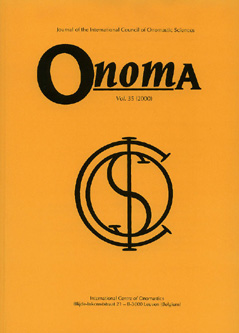
Call for papers for Onoma 52 "Asian Onomastics"

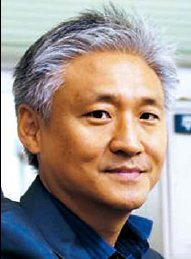
by Sungjae CHOO

Guest editor, Onoma 52

Asian Onomastics

(Onoma 52)
 

FIRST CALL FOR PAPERS


Dear colleagues,


I have the honor to be invited by the editorial board of Onoma as the guest editor of its volume 52, which will specially be devoted to onomastics in Asia. I was informed that this special volume would be parallel with Onoma’s continuing orientation toward the ‘global.’ I believe most of you remember the special volume ‘African onomastics,’ specially edited for volume 44 in 2009.


There are diverse and a wide range of specificities in Asian onomastics. The East Asian culture area, including Korea, China, Japan, Taiwan, and even Vietnam have used the Han () characters developed in the continental East Asia for their distinct spoken languages. Therefore, their names, either of places or of persons, share many things in common. The Southeast Asian region, including Thailand, Malaysia, Indonesia, Singapore, the Philippines, have developed their own naming culture, based on their unique languages and cultural heritages.


This volume, titled ‘Asian Onomastics,’ intends to encompass all the interests related to names in Asia. A mere introduction of the nature and characteristics of names in Asia would be itself an attractive subject, but I hope to receive articles with more focused topics such as:


·          linguistic composition and characteristics of names,


·          cultural heritages mirrored in the naming,


·          perception on the place and its name,


·          names manifested in the social relations,


·          contests, conflicts and disputes on naming,


·          economic issues in naming,


·          research methodologies in the Asian onomastics, and


·          practices of standardizing geographical names.


Listing these topics does not disqualify colleagues from suggesting additional topics. I expect the list to be plentiful with them.


This volume is targeted to be published in 2017. Those who are interested in submitting a paper are advised to send me a short abstract (within one page) no later than 30 June 2016, preferably by e-mail, presenting the basic content of the paper you wish to submit for this volume. Based on these abstracts, necessary choices will be made with some priorities. Those colleagues whose papers are accepted will receive further instructions for next steps, but completed papers are epected to arrive no later than 1 February 2017.


Mr. Peter Kang, Professor of the National Dong Hwa University, Taiwan and Ms. Multamia Lauder, Professor of the University of Indonesia will contribute to this volume as co-editors.


Abstracts and (later) complete articles are accepted in English, French or German.


I look forward to your contributions.


Yours sincerely,


Sungjae CHOO

Guest editor, Onoma 52

Professor, Kyung Hee University

Seoul 02447

Korea

Tuesday, April 12, 2016

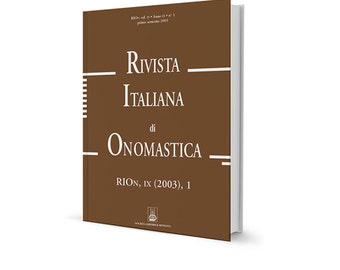
Un decennio di onomastica letteraria in Italia 2006-2015


https://www.academia.edu/19956176/Un_decennio_di_onomastica_letteraria_in_Italia_2006-2015_in_Rivista_Italiana_di_Onomastica_XXII_2016_1_pp._155-162

in «Rivista Italiana di Onomastica», XXII (2016), 1, pp. 155-162.

Abstract:

(Ten years of literary onomastics in Italy [2006-2015])

The contribution illustrates structure and criteria of the bibliographic repertoire of the studies of literary onomastics in Italy from 2006 to 2015, updating the analogous bibliographic census edited ten years ago by the author together with Bruno Porcelli. The corpus shows how such studies have had a further important development in Italy and is also an occasion for the author for a quantitative and methodological evaluation of the state of onomastic research in its different branches.

by Leonardo Terrusi
Leonardo Terrusi
Habilitation as associate professor in "Italian Literature, Literary Criticism and Comparative Literature" (10/F1), and in "Italian Linguistics and Philology" (10/F3) (ASN 2012).

Propose new place names for Canada


http://geonova.novascotia.ca/place-names

http://www.americannamesociety.org/propose-new-canadian-place-names/

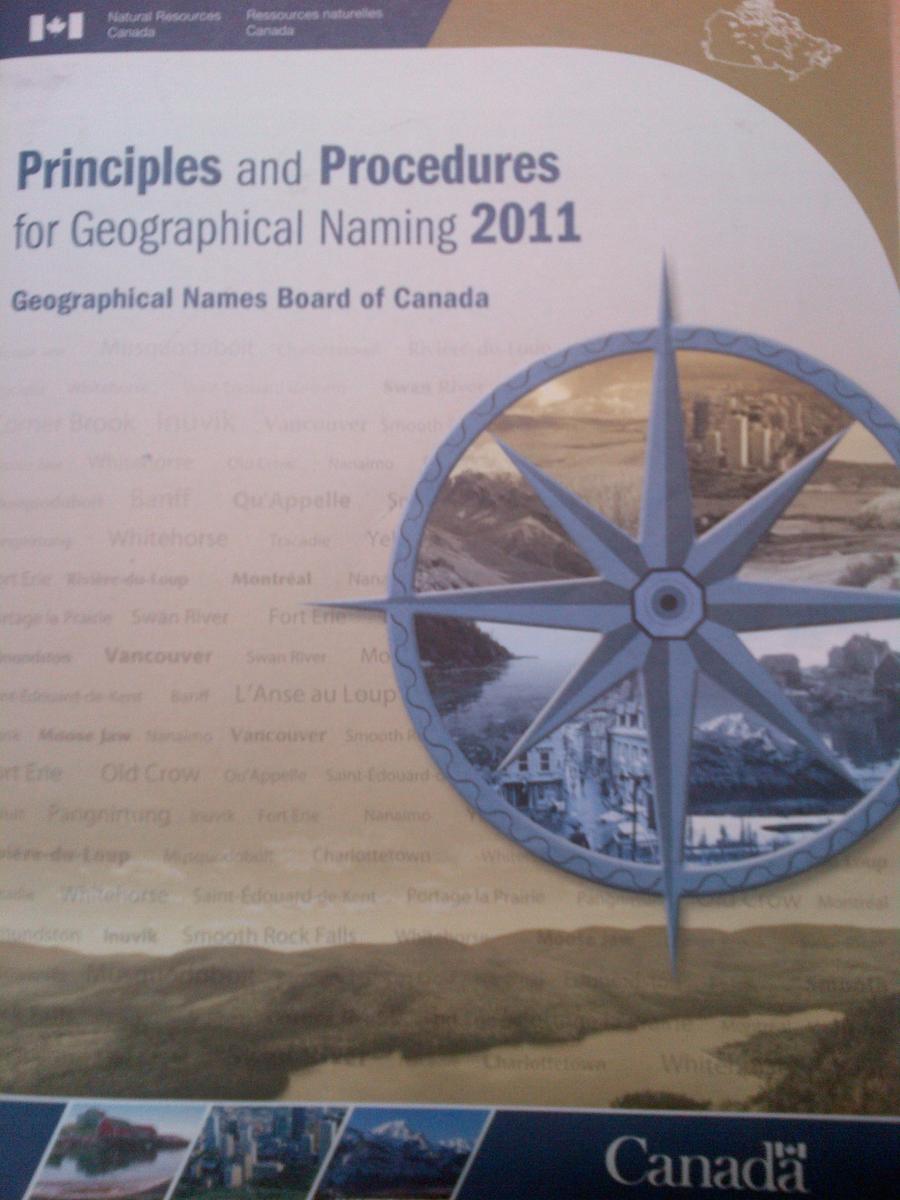
The Geographical Names Board of Canada (GNBC) is inviting the general public to propose new place names for Canada. The accepted toponyms will be recorded in a national register, the Canadian Names Database. There is information on the proposal guidelines and review process specifically for Nova Scotia.


Find Your Way with Place Names

Everyone uses place names every day to describe where we are and where we want to go.
Place names on maps, signs and daily conversation help us identify historic, cultural and natural features on the landscape.   Name origins may reveal histories about the people, place and their community.
Propose New Place Name
Names evolve over time and new names can be proposed.  Name Applications may be submitted by anyone.  Proposals are reviewed and may be approved by the Nova Scotia representative on the Geographical Names Board of Canada.
Get Started:
  1. Read Guidelines 
  2. Review Naming Process
  3. Propose New Name

How the Program Works

Since 1897, Official place names have been authorized through a national committee known today as the Geographical Names Board of Canada (GNBC).  The GNBC creates and promotes the use of geographical naming standards across Canada.   Names are recorded in a national authoritative register known as the Canadian Geographical Names Database.  Official place names are the ones that appear on government maps.

Source Matters

We want names on maps to be reliable.  Access to authoritative information is key in helping people find their way.
Official Place Names are part of the foundation geography in the Nova Scotia Geospatial Infrastructure (NSGI).  Through this environment, the authoritative trusted source of place names is accessible to government and public.

Monday, April 11, 2016

Итоги междисциплинарного семинара «Историческая ономастика и этническая история»

http://archtat.ru/ru/archive/photo/34/

4 апреля 2016 года в Академии наук Республики Татарстан состоялся междисциплинарный семинар «Историческая ономастика и этническая история», организованный Институтом археологии им. А.Х. Халикова и Казанским (Приволжским) федеральным университетом.

О происхождении географических названий и возможностях топонимики, как источнике важного дополнительного материала к данным археологии и других смежных наук, а также основных методах, с помощью которых можно определить происхождение тех или иных субстратных топонимов сообщил д.филол.н. Олег Смирнов (Екатеринбург).

К.филол.н. Александр Пустяков (Хельсинки) свое сообщение посвятил вопросу пермских топонимов на территории Ветлужско-Вятского междуречья. Анализ топонимического материала и картографирование выявленных в ходе анализа топонимов позволяют выделить ареал удмуртской топонимии, которая совпадает с ареалом распространения этнотопонимов с компонентом «удмуртский».

Работу семинара завершил его модератор д.и.н., член-корреспондент РАН Владимир Напольских с докладом «Финно-угорская этнонимия Поволжья и Предуралья как исторический источник», в котором подверг анализу самоназвания и внешние названия финно-угорских народов Поволжья и Предуралья с точки зрения отражения в них этнической истории региона.

В заключение семинара состоялась оживленная дискуссия.