Showing posts with label NameSorts. Show all posts

Friday, January 9, 2015

What’s in a suspect terrorist name?

http://namesorts.com/2015/01/08/whats-in-a-suspect-terrorist-name-cherif-kouachi-said-kouachi-and-mourad-hamyd/
CharlieHebdo_Header

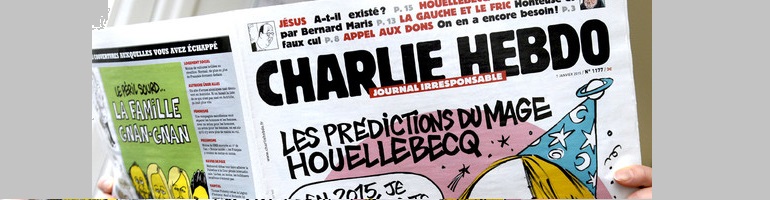
A year and half ago, terrorism stroke Boston and there was a confusion about the origin of the terrorists, the Tsarnaev brothers. Czech Republic? The Russians hitting on US soil? Not quite. Yesterday, terrorism stroke Paris and the same confusion exists: are the suspect terrorists from Chechnya, from Syria, from Egypt, from France?
Two of them have French nationality, yet their names reflect a north-African origin.
Can applied onomastics help in a manhunt? Not likely. But it can help in preventing such events from occurring, months in advance.
Applied onomastics, the science of proper names, have been used before by security agencies: LAS software (acquired by IBM) was helping the CIA in the 80’s to keep tab on the KGB, recognizing Slavic names in databases; after 9-11, a lot of attention was directed towards improving name matching to reduce false positives in terrorist watch lists.
Is it ethical to mine personal names to analyze global terrorism trends, or to target individual people as potential terrorists? Firstly, it’s two different things. Secondly, we have to consider what’s at stake here.
Being French myself, I remember as a kid watching Cabu on TV in Dorothée’s Récré A2 show. This man entertained me as a kid, made me think as an adult with his provocative caricatures. He has been killed along with his friends and colleagues. In addition, a symbol was badly injured: Charlie Hebdo was symbolic of the Freedom of the Press in France. It is a free thinking and highly provocative newspaper – which just couldn’t exist in many countries that don’t have the same tradition of ‘laïcité’ (separation between the Churches and the State). The stakes are high: it’s not just the French, the very heart of France was targeted by the terrorists.
Two French police officers have also been brutally murdered, doing their duty. Again their name tells a moving story, Franck Brinsolaro and Ahmed Merabet. Anyone can be a victim of terrorism.
Protecting France, the French people of all origins as well as the visitors of France requires collecting and processing intelligence. Understanding the sociology of criminal networks is critical and can be the difference between life and death. Even more so when France is involved in military operations abroad – all having ethnic or religious components (Mali, Libya, Syria…)
Nationality (and hence indirectly possibly race, ethnicity or religion) can play a specific role in decision making, in the context of asylum, immigration, customs, general policing, including counter-terrorism. The distinction between the language ‘discriminatory ethnic profiling’ rather than the more common ‘ethnic profiling’ to describe the practice of basing law enforcement decisions solely or mainly on an individual’s race, ethnicity or religion demonstrates the European Union recognition for the security forces need to understand and recognize the complexity of the relationships that exist between nationality, geography, and more subjective concepts such as: ethnic origins, cultural backgrounds, civilizations, religions.
Citation: (2007) 1133-Guide-ethnic-profiling_EN : Towards More Effective Policing, a guide by the European Union.
It doesn’t mean onomastics should be used as a tool to target migrants (the ‘délit de sale geule’). We must defend our values, not reny them. In fact, a great danger comes from people newly converted to Islam, going to fight in Syria or elsewhere.Gilles Le Guen, originally a sailor from Brittany, went to fight in Mali under the name of Abdel Jelil ( عبد الجليل ). Recognizing names from Brittany closely related to a network of names in Arabic (or conversely) themselves closely related to terrorist groups should definitely ring bells.
There is a strong concern about the security of the French Jewish people too.
So far, the French security forces have been reluctant to use advanced data mining techniques and ‘digint’ and prefer to rely on their excellent capabilities in ‘humint’ (infiltration of terrorist groups). There are reasons for that. It’s not a matter of technical capability.
  1. The French constitution states: France is ‘one and undividable’ (« La France est une République indivisible, laïque, démocratique et sociale »). This lead to the following interpretation: the French state should remain colour blind, not see the internal sociology of France. As a consequence, there are very few statistical tools available to measure –for example- the level of discrimination towards migrants in France (including second generation), or to measure to which extend different populations have equal access to public services, or to evaluate the security risk specific to certain populations.
  2. Lost digital sovereignty: France (and Europe as whole) is struggling to build up its digital sector. In “Big Data”, France has good tech but doesn’t have the Data. The main French Internet companies are either a former state monopoly (SNCF -the train company- is the leader in digital commerce; PagesJaunes, the main competitor of Google in digital advertising for companies, is formerly a France Télécom division), in serious trouble (Viadeo) or on the path to be acquired by a US company – with few exceptions (controversial Illiad, …) The current situation is intolerable for France: not only the GAFA (Google, Apple, Facebook, Amazon) make huge benefits and don’t pay much tax, but they don’t employ many people in France and they know more about France that the French statistics agency (INSEE). So, France has to rely on cooperation with foreign security agencies (mainly US) to obtain vital information in matters of Police or national security. The French government is trying to get leverage by heading the fight against the GAFA on Data Protection and Tax at the EU level, which has lead to the French Data Protection agency to gain a huge power: the CNIL is feared by all French police and intelligence agencies where it has career ending powers.
It will take courage and efforts in France to change political views on this, but it’s essential both to build a sustainable digital ecosystem as well as to overcome France deep identity crisis. France has a huge potential: it has strong universities in social sciences, excellent engineers as well as mathematicians, it can still attract talents from many countries. But security is of the essence: no world class scientist will go to work in Saclay –the scientific and high-tech cluster to be built South of Paris- if they don’t feel safe commuting in the suburban train or in the city. This security must be granted to all: French of all origins, French Jews, migrants, tourists… In the 21st century, that will require to combine human intelligence and automated intelligence – Humin and Digint.

Wednesday, December 31, 2014

Happy to welcome you on the last day of 2014 and on the first day of 2015


Dear readers! This is Dr. Evgeny Shokhenmayer, happy to welcome you on the last day of 2014, here on 
www.e-onomastics.blogspot.com. I would be very surprised if many people visited my blog on New Year’s Eve. Surely you have friends and family to celebrate everything you achieved in 2014 and to share your hopes for 2015.


I don’t want to keep you from the table full of delicious food and from watching the fireworks, so instead of my usual long speech I’ll just say this…

2014 was an amazing year for me, and for e-Onomastics. This blog yet again broke all records receiving over 132 000 visits and getting over 960 posts. Our Google Onomastics community grew from 0 fans to over 25 and counting!

For me personally the biggest achievement of 2014 was presenting and posting from ICOS 2014 in Glasgow together with Elian Carsenat. It took more than one year of research, thousands names' analysis and hard work, but finally it’s done! I'm proud of taking part in NamSor™ Applied Onomastics Software in quality of linguistic expert. We are very excited because it will enable more name recognition software's application to classify and categorize wide range of various names! Our next step will be to undertake the surnames analyses of casualties in memory of the centenary of the WWI 1914-1918. 


I truly am grateful to everyone who contributed to e-Onomastics Blog in 2014, to all the visitors who came here searching for the latest names-related updates, to all the linguists who used this website and recommended it to their colleagues, to everyone who referred their friends here to get help with onomastics, to people who sent their feedback and helped us to improve. Your support means more than I can put into words.

I love you all, and hope you have a wonderful 2015!


onomastically yours,

Evgeny


Saturday, July 12, 2014

Very Scottish names

http://namesorts.com/2014/07/11/very-scottish-names/

The NameSorts' team recently opened GendRE API to recognize the gender of international names. What makes it so accurate?
Let's find out: 
We recognize the cultural origin of international names, so we can tell that Andrea Rossini is most likely an Italian name (and a male name), whereas Andrea Parker is most likely an anglosaxon name (and a female name); 声涛周 is most likely a male ; “O. Sokolova” is most likely a female. Try those:
We’re continuously working on improving the accuracy of our software, for a particular country/region. This year, in August, the University of Glasgow will host the 25th International Congress of Onomastic Sciences, the premier conference in the field of name studies. So, how accurate is NamSor at recognizing Scottish names?
The following chart shows some backtesting results: how NamSor correctly or incorrectly classified ~3000 names that are labelled as Scottish in several databases (Freebase, WWI casualties) among one hundred other places/regions/cultures (from Ireland to Zimbabwe).
20140711_NamSor_ScottishNames_v003
Also, this is a list of “Very Scottish” names coming from the software : craig docherty, alasdair macgregor, malcolm finlayson, alistair urquhart, rikki ferguson, scott shearer, scott taggart, craig strachan, james wedderburn, scott muirhead, bobby prentice, scott mcculloch, stuart munro, grant munro, alistair woodburn, deborah mccallum, hugh mackintosh, scott chisholm, bobby shearer, billy abercromby. Does they make sense? Feedback welcome.
We hope to make it even better, so we can produce interesting DataViz from Twitter or other cool databases/services.
Read further:

Wednesday, December 4, 2013

What’s in a Twitter name?


What’s in a Twitter name or handle? Anything: real names, company names, fancy names, pictograms, … the amount of information produced through Twitter is enormous, but it’s possible to filter this ‘bigdata’ in a way to make sense of it. Elian Carsenat created geographic maps of e-Diasporas, by recognizing the Twitter names of geotagged tweets: Irish, Swedish, Russian, etc. He called this Twitter GEOnomastics, borrowing a term from your obedient servant Dr. Evgeny Shokhenmayer (2010).

How does it work? The software accurately recognizes that ‘NamSor Applied Onomastics’ (@NomTri) is probably a trade mark or a company name, whereas ‘Elian Carsenat’ (@ElianCarsenat) is probably a personal name – and most likely a French name. Fancy names are also recognized and filtered out.

The author sees wide applications of such maps. When Captain James Cook explored the seas in the 18th century, having accurate maps could mean life or death for a ship and its crew. Working out latitude had been known for centuries, but measuring longitude was still tricky and inaccurate. In today’s digital world, he sees latitude as ‘recognizing the semantics’ in a message expressed in a particular language and longitude as ‘recognizing the culture’ of the target audience. He's full of curiosity on how and to whom this map can be useful, possibly Twitter itself. Elian Carsenat is going from Paris to Dublin in two weeks to find out : he aspires to meet people at Twitter European Headquarters. Twitter just issued its IPO but is also not clear how to make its money.

Read his next posts to discover more Twitter GEOnomastics maps showing Irish, French, German, Spanish, Russian, Turkish, Swedish, Italian, Dutch e-Diasporas (or cultural influence).

NB. The maps are currently interactive, so you can zoom in and out of a particular territory, however this may be shut down in a month or two.

http://cdb.io/1beWaVB

If you are interested in the Twitter onomastic geotagging, read further here:

What’s in a Twitter name? A glance at the Irish digital Diaspora | NameSorts

http://onomastics.co.uk/whats-in-a-twitter-name/


Saturday, December 29, 2012

Name Is the Game, still

European company directors onomastics mille-feuille (2012)

from here: http://namesorts.com/2012/12/29/european-company-directors-onomastics-mille-feuille-2012/


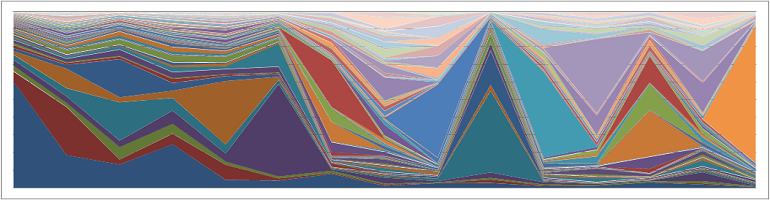
This arty colourful picture is a graphical view of the onomastics of about half a million company directors in the European Union (plus Switzerland). Only the 5K largest companies of each country were considered, so that excludes SMEs and restaurants. What does it say about European big business? Basically, that large companies in Greece (GRC) -for example- have Greek company directors, etc. Each line above the country ISO3 code corresponds to similar pie chart.

Obviously, European economic integration and the mobility of European top executives are still a work in progress.

http://www.nomtri.fr/

By the way, I was told that there is a new project or program which allows sorting the names.


The website is not finished yet, but I hope wi will get more information later.
They noticed:


Data mining and analytics
We use sociolinguistics to structure information, according to your business and reporting needs.


Profiling and targeting
We provide flexible data filtering solutions to match your business and targeting needs.


Social graphs dataViz
We cluster and colourize social graphs according to your business and visualization needs.

Check it out: http://www.nomtri.fr/