- blog on e-Onomastics - digital onomastics - e-Science about proper names
- blogue sur e-Onomastique - onomastique numérique - e-Science sur les noms propres
- Blog über e-Onomastik - digitale Onomastik - e-Wissenschaft über die Namenkunde
- блог по oномастике
Au moment où l'UMP s'apprête à adopter Les Républicains, le Figaro a interrogé Alexandre Hurel, un spécialiste de la création des noms de marques, une activité connue sous le terme anglo-saxon de «naming».
Ce qui saute aux yeux des spécialistes des marques lorsqu'ils observent le nom «Les Républicains» c'est l'amplitude que celui-ci implique. «Cela peut tout et rien dire», souligne Alexandre Hurel, analyste des problématiques de création de nom («naming») au sein de la plateforme participative Creads. «Ce nom fait appel autant à un système d'organisation politique qu'à des valeurs, des gens ou une histoire», observe-t-il en précisant que son efficacité, même si le terme est associé à une notion flatteuse, dépendra beaucoup de ce qui lui sera associé. Existera-t-il par exemple un pacte des républicains?
Rupture?
Après l'UMP, l'expression «Les Républicains» fait appel à une nouvelle légitimité. En changeant de nom, on rompt avec des pratiques vieillissantes basées sur des slogans (RPR, UDF…) et l'on casse des codes. «Le gain est forcément un souffle de fraîcheur», note Alexandre Hurel, en soulignant la modernité d'un terme volontairement rassembleur en rupture également avec l'idée de combat que l'on retrouve dans certains noms rivaux tels que le «Front national», le «Front de gauche» ou le «Parti de gauche» renvoyant à la force ouvrière et à la lutte. En ce sens, les «Républicains» ont une apparence plus neutre.
Quel gain pour le chef?
Chef des Républicains n'a pas le même portée symbolique que chef de l'UMP. D'abord, en se désignant républicain, on soutient, de manière implicite, que les autres ne le sont pas. C'est donc une occasion de «s'emparer du monopole d'une grande idée» observe le spécialiste de Creads. «Quelque part, devenir chef des républicains, c'est devenir chef de la France», ajoute-t-il en estimant qu'il peut y avoir dans cette démarche une volonté affirmée de transcender les clivages partisans. La France n'est-elle pas au fond la République française? Autrement dit, Les Républicains ratissent plus large et l'adoption du nouveau nom fait émerger un «nouveau chef». L'agence Creads y voit aussi une sorte d'effet subliminal: «On a bien compris que Nicolas Sarkozy était derrière cette évolution mais s'il a le pouvoir d'imposer ce changement, quelque part, il a aussi le pouvoir de diriger son parti»
Pourquoi changer?
Un changement de marque peut s'imposer quand la concurrence devient de plus en plus aigüe et lorsque une marque concurrente est jugée trop proche. Ici, il semblerait que la volonté de changement soit la principale explication. Il s'agit non seulement de moderniser la droite mais aussi de lui donner un «second souffle», lui «redonner ses lettres de noblesse» et annoncer un «nouveau positionnement». C'est d'ailleurs pour cette raison qu'un changement de nom seul ne suffit pas et doit être associé à d'autres évolutions indispensables (programme, méthode…). L'efficacité du changement en dépend.
Les avantages majeurs
Au-delà de l'impression recherchée du changement, l'adoption d'un nouveau nom permet de rassembler une équipe. «Cela réunit des gens autour d'une table en les questionnant sur cette nouvelle identité» explique le consultant, en soulignant l'existence implicite d'un nouveau contrat entre les acteurs concernés et les dirigeants du parti. «On peut se mettre d'accord sur ce nom en définissant qui l'on veut être en le choisissant» ajoute-t-il.
Les dangers
Le premier risque lié au lancement des «Républicains» est de constater, un jour, que ce changement de nom n'aura servi à rien. L'investissement, non négligeable en terme de coûts, ne se limite pas à l'unique conception du nom ou au démarche juridiques préalables puisque cela implique une révision complète des logos et des outils de communications (affiches, tracts, papiers, produits marketing…). Dans un contexte économique tendu, où les Français sont soumis à des efforts importants sur le plan fiscal, on peut imaginer l'écueil pour un parti engageant de telles dépenses. Chez Creads, on estime cependant que le grand public ne se rend pas forcément compte de ces coûts. «En adoptant un tel nom, prévient Alexandre Hurel, la droite s'astreint à beaucoup de discipline car lorsqu'on s'appelle «Les Républicains», on ne peut pas se permettre de scandales financiers.» Dans cette hypothèse, on peut même penser que le changement de nom pourrait se retourner brutalement contre le mouvement. Certains professionnels de la presse écrite font également observer la taille du nouveau nom. Il sera plus difficile à placer dans un titre que PS ou UMP. Sauf si les Républicains décideront d'être identifié sous le lettre «R» ou «LR».
Quand peut-on évaluer l'efficacité du changement?
«Immédiatement ou jamais» répond Alexandre Hurel. Donc, la réussite n'est pas réellement vérifiable compte tenu du nombre importants de facteurs en jeu. Avant l'installation de la marque, il est évident qu'un changement de nom permet de faire parler de soi. Le gain à court terme serait donc réel. En revanche, sans rénovation de la communication du parti et sans l'adoption d'un nouveau langage, l'opération changement de nom à l'UMP, pourrait être perçue comme un «coup d'épée dans l'eau».
Et le modèle américain?
«Il est certain qu'il faudra se démarquer des républicains américains pour éviter l'amalgame», considère l'observateur de l'agence Creads, pour qui un changement d'identité ne peut jamais se limiter à un simple changement de nom. Alexandre Hurel rappelle le mot Apple «ne signifie pas grand chose mais chacun l'associe aujourd'hui à la success story de la première capitalisation mondiale. Quand la marque «Les Républicains» sera dans la rue, cela aidera peut-être le parti à se démarquer.»
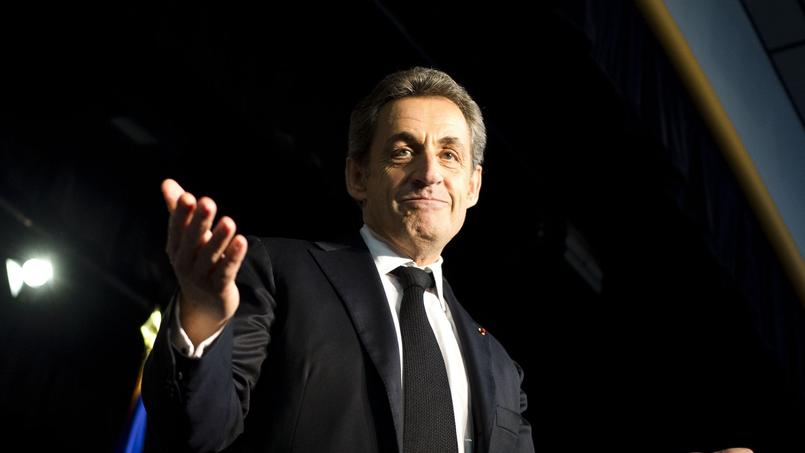
France's former president Nicolas Sarkozy attends the French Ligue 1 soccer match between Paris St Germain and Reims at the Parc des Princes stadium in Paris, France, May 23, 2015.
REUTERS/CHARLES PLATIAU
French conservatives overwhelmingly backed renaming their UMP party "The Republicans" on Friday in a boost for former president Nicolas Sarkozy, who wants to use the re-branding as a springboard for the 2017 presidential election.
With 83 percent of the party's more than 210,000 members backing the name change, the vote marked a new step in Sarkozy's political comeback, although it remains at risk from challengers within the party and his judicial woes.
"We call on all Republicans to rally around us," Sarkozy said in a statement.
The strong majority makes it more likely that Sarkozy will win his party's nomination to run for president and weakens his main challenger, former prime minister Alain Juppe.
Nearly 46 percent of the UMP members voted in the poll, which was widely seen as a test of Sarkozy's popularity within the party. While it was assumed that the proposed name change would win the day, a narrow majority would have weakened Sarkozy's position.
The new party's new statutes and its new executive bureau were approved with majorities of 96 and 95 percent respectively.
Sarkozy, who was elected party chief with 64.5 percent of the votes in November, was French president from 2007 to 2012.
A divisive figure, Sarkozy has gone to great lengths over the past few months to show that he is working on uniting the party behind him.
While his return at the helm of the "Union for a Popular Movement" (UMP) was shaky at first, the party's victory in local elections in March enhanced Sarkozy's credibility and his changes to win the party's primaries vote in 2016.
"The final word has not been spoken yet, far from it, but Sarkozy is gradually beginning to dominate his political family," said Jerome Fourquet of polling firm Ifop.
The name "Les Republicains" is highly controversial, with critics saying it is an attempt by the political right to usurp the values of the entire nation. A court rejected a call for an emergency ban earlier this week.
(Reporting by Sophie Louet and Ingrid Melander, writing by Geert De Clercq; Editing by Larry King)
Мэр Екатеринбурга Евгений Ройзман поддержал инициативу одного из депутатов городской думы назвать улицу в честь убитого политика Бориса Немцова.
"Мне все равно, что это будет - улица, проспект, площадь, шоссе… Борис Ефимович Немцов был крупным государственным деятелем эпохи демократических надежд и либеральных реформ. Сегодня внес в городскую думу Екатеринбурга предложение", - написал депутат Дмитрий Головин 6 марта на своей странице в ЖЖ.
Будет ли именем Немцова названа уже существующая улица или новая, в строящемся микрорайоне, как предлагает парламентарий, пока не известно. Руководство города готово рассмотреть оба варианта.
"Я вам так скажу: это Екатеринбург. Здесь все решается с учетом мнения населения. Поэтому это пройдет через комиссию, через городскую думу, через комиссию по переименованиям. Это будет голосование... Что касается меня, я поддерживаю эту инициативу", - цитирует РИА Новости градоначальника.
Надо отметить, что тема переименования улиц в Екатеринбурге вообще популярна. Это явление приобретало массовый характер дважды - в 1962 и 1988 годах - но и сейчас регулярно общественные деятели предлагаю дать новые название улицам, носящим имена членов политбюро. Буквально в конце февраля стало известно, что к 300-летнему юбилею города, который будет отмечаться в 2023 году, планируют сменить названия восьми улиц. В частности, Сакко и Ванцетти могут переименовать в Усольцевскую - так она называлась до 1930-х годов.
Опубликовано на сайте "Российской Газеты" 7 марта 2015 г.
Résumé : Cette bibliographie (francophone) comporte des références à des travaux utiles à l'étude de la dimension politique des noms propres (chrononymes, toponymes, anthroponymes, praxonymes et ergonymes). À quelques exceptions près, elle ne mentionne pas les travaux de portée générale consacrés aux noms propres, malgré leur évidente utilité en la matière. Elle privilégie les études portant sur des objets de l'histoire moderne et, surtout, contemporaine. Disponible sur Internet : [ http://www.cairn.info/article.php?ID_ARTICLE=MOTS_087_0085 ]
A year and half ago, terrorism stroke Boston and there was a confusion about the origin of the terrorists, the Tsarnaev brothers. Czech Republic? The Russians hitting on US soil? Not quite. Yesterday, terrorism stroke Paris and the same confusion exists: are the suspect terrorists from Chechnya, from Syria, from Egypt, from France?
Two of them have French nationality, yet their names reflect a north-African origin.
Can applied onomastics help in a manhunt? Not likely. But it can help in preventing such events from occurring, months in advance.
Applied onomastics, the science of proper names, have been used before by security agencies: LAS software (acquired by IBM) was helping the CIA in the 80’s to keep tab on the KGB, recognizing Slavic names in databases; after 9-11, a lot of attention was directed towards improving name matching to reduce false positives in terrorist watch lists.
Is it ethical to mine personal names to analyze global terrorism trends, or to target individual people as potential terrorists? Firstly, it’s two different things. Secondly, we have to consider what’s at stake here.
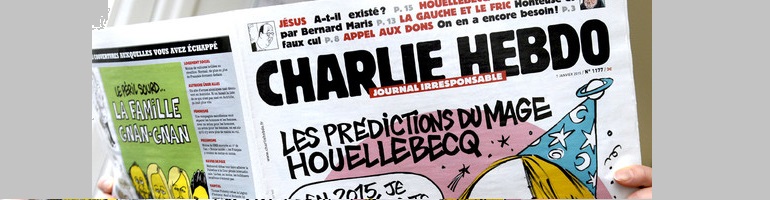
Being French myself, I remember as a kid watching Cabu on TV in Dorothée’s Récré A2 show. This man entertained me as a kid, made me think as an adult with his provocative caricatures. He has been killed along with his friends and colleagues. In addition, a symbol was badly injured: Charlie Hebdo was symbolic of the Freedom of the Press in France. It is a free thinking and highly provocative newspaper – which just couldn’t exist in many countries that don’t have the same tradition of ‘laïcité’ (separation between the Churches and the State). The stakes are high: it’s not just the French, the very heart of France was targeted by the terrorists.
Two French police officers have also been brutally murdered, doing their duty. Again their name tells a moving story, Franck Brinsolaro and Ahmed Merabet. Anyone can be a victim of terrorism.
Protecting France, the French people of all origins as well as the visitors of France requires collecting and processing intelligence. Understanding the sociology of criminal networks is critical and can be the difference between life and death. Even more so when France is involved in military operations abroad – all having ethnic or religious components (Mali, Libya, Syria…)
Nationality (and hence indirectly possibly race, ethnicity or religion) can play a specific role in decision making, in the context of asylum, immigration, customs, general policing, including counter-terrorism. The distinction between the language ‘discriminatory ethnic profiling’ rather than the more common ‘ethnic profiling’ to describe the practice of basing law enforcement decisions solely or mainly on an individual’s race, ethnicity or religion demonstrates the European Union recognition for the security forces need to understand and recognize the complexity of the relationships that exist between nationality, geography, and more subjective concepts such as: ethnic origins, cultural backgrounds, civilizations, religions. Citation: (2007) 1133-Guide-ethnic-profiling_EN : Towards More Effective Policing, a guide by the European Union.
It doesn’t mean onomastics should be used as a tool to target migrants (the ‘délit de sale geule’). We must defend our values, not reny them. In fact, a great danger comes from people newly converted to Islam, going to fight in Syria or elsewhere.Gilles Le Guen, originally a sailor from Brittany, went to fight in Mali under the name of Abdel Jelil ( عبد الجليل ). Recognizing names from Brittany closely related to a network of names in Arabic (or conversely) themselves closely related to terrorist groups should definitely ring bells.
There is a strong concern about the security of the French Jewish people too.
So far, the French security forces have been reluctant to use advanced data mining techniques and ‘digint’ and prefer to rely on their excellent capabilities in ‘humint’ (infiltration of terrorist groups). There are reasons for that. It’s not a matter of technical capability.
The French constitution states: France is ‘one and undividable’ (« La France est une République indivisible, laïque, démocratique et sociale »). This lead to the following interpretation: the French state should remain colour blind, not see the internal sociology of France. As a consequence, there are very few statistical tools available to measure –for example- the level of discrimination towards migrants in France (including second generation), or to measure to which extend different populations have equal access to public services, or to evaluate the security risk specific to certain populations.
Lost digital sovereignty: France (and Europe as whole) is struggling to build up its digital sector. In “Big Data”, France has good tech but doesn’t have the Data. The main French Internet companies are either a former state monopoly (SNCF -the train company- is the leader in digital commerce; PagesJaunes, the main competitor of Google in digital advertising for companies, is formerly a France Télécom division), in serious trouble (Viadeo) or on the path to be acquired by a US company – with few exceptions (controversial Illiad, …) The current situation is intolerable for France: not only the GAFA (Google, Apple, Facebook, Amazon) make huge benefits and don’t pay much tax, but they don’t employ many people in France and they know more about France that the French statistics agency (INSEE). So, France has to rely on cooperation with foreign security agencies (mainly US) to obtain vital information in matters of Police or national security. The French government is trying to get leverage by heading the fight against the GAFA on Data Protection and Tax at the EU level, which has lead to the French Data Protection agency to gain a huge power: the CNIL is feared by all French police and intelligence agencies where it has career ending powers.
It will take courage and efforts in France to change political views on this, but it’s essential both to build a sustainable digital ecosystem as well as to overcome France deep identity crisis. France has a huge potential: it has strong universities in social sciences, excellent engineers as well as mathematicians, it can still attract talents from many countries. But security is of the essence: no world class scientist will go to work in Saclay –the scientific and high-tech cluster to be built South of Paris- if they don’t feel safe commuting in the suburban train or in the city. This security must be granted to all: French of all origins, French Jews, migrants, tourists… In the 21st century, that will require to combine human intelligence and automated intelligence – Humin and Digint.
U.S. Secretary of State John Kerry leaves the NATO press room after giving a statement following a round table meeting of the global coalition to counter the Islamic State militant group at NATO headquarters in Brussels on Dec. 3. (Eric Vidal/Reuters)
On Wednesday, John Kerry was speaking at NATO headquarters in Belgium during a meeting of the United States-led coalition against the Islamic State extremist group. During his remarks, the secretary of state made a subtle, yet noteworthy, change to the language he was using: He began referring to the Islamic State by a name they hate.
After Kerry's first reference to the group in the speech, Kerry stopped referring to the group as ISIL (short for the Islamic State of Iraq and the Levant) and instead began referring to them as Daesh, an acronym for the group based on the Arabic original.
Kerry has rarely used the term Daesh to refer to the Islamic State. In October, he sporadically used the phrase while talking with Egyptian Foreign Minister Sameh Shoukry in Cairo, though he still used ISIL in most references. On Wednesday, however, Kerry referred to the group as Daesh almost exclusively – he used the term 16 times and only used ISIL twice.
Naming the Islamic State has proved a problem for many organizations since the Sunni Islamist extremist group gained traction in Iraq this year. At first, many referred to it as the Islamic State of Iraq and Syria or the acronym ISIS. However, due to differences over how the name should be translated from its Arabic original, the U.S. government and some others referred to them as ISIL.
The group later announced that it should simply be called the "Islamic State" – a reference to the idea that the group was breaking down state borders to form a new caliphate – and many media organizations (including The Washington Post) began to refer to them this way. That in turn led to some complications: Islamic clerics around the world expressed anger at the extremist group being used to portray all of Islam, and requested that it be called by another name (a group of British imams suggested calling it the "Un-Islamic State," arguing that it was "neither Islamic, nor is it a state").
In most Arabic nations, however, the group is generally referred to as Daesh. Historian and blogger Pieter van Ostaeyen wrote this year that that word was a transliteration of an Arabic word (داعش), an acronym for al-Dawla al-Islamiya fi al-Iraq wa al-Sham (which is itself a transliteration of the group's Arabic name: الدولة الإسلامية في العراق والشام). The word can be transliterated a variety of different ways: The Washington Post uses DAIISH, but DAASH, DAIISH and DAISH are also used.
Some non-Arab countries, including France, have begun using the name, too. "I do not recommend using the term Islamic State because it blurs the lines between Islam, Muslims and Islamists," Foreign Minister Laurent Fabius told reporters in September. "The Arabs call it ‘Daesh’ and I will be calling them the ‘Daesh cutthroats.’ ”
Swapping one acronym for another may not seem like too big a deal. But there's an interesting detail here: According to multiple reports, the Islamic State loathes the name. There have been reports of the Islamic State threatening to cut out the tongues of anyone who used the phrase publicly, perhaps due to the word's similarity to another Arabic word, دعس, or Das, which means to trample down or crush. The word "Daeshi" is used as an insult by anti-Islamic State groups.
It's tempting to believe that Kerry was getting his revenge on the Islamic State, which has insulted him personally in the past year, but Kerry may just have been showing deference to his audience, many of whom were Arab leaders. On Friday, a State Department spokesperson denied reports that there was any change in policy. "In routine matters and documents, the Department refers to the terrorist organization as ISIL," the spokesperson said.
Adam Taylor writes about foreign affairs for The Washington Post. Originally from London, he studied at the University of Manchester and Columbia University.
Que leur prend-il donc de vouloir changer le nom de leur parti ? Manuel Valls, Marine Le Pen et Nicolas Sarkozy manifestent ainsi, chacun, un sentiment d'inadéquation qu'ils souhaitent partager. Et un besoin de s'en affranchir en modifiant d'abord le mot, sinon la chose. On comprend qu'ils risquent l'entreprise. On devine ce qu'ils en espèrent. On mesure sa difficulté.
Il faut du courage à Valls pour reconnaître que le mot « socialisme » a pris une connotation archaïque et désagréable (impôt, bureaucratie, sectarisme, irréalisme). Il faut une certaine lucidité à Le Pen pour admettre que le Front national gagnerait à se libérer de ses implications historiques (pétainisme) ou idéologiques (antisémitisme, racisme ordinaire…). Et Sarkozy a du mérite à constater l'échec politique de l'UMP à réunir la droite et le centre, et son échec moral dû à ses fraudes électorales et financières. Qu'elles aient été commises par son propre entourage y ajoute même de la saveur.
Savoir ce qu'ils espèrent les uns et les autres de leur entreprise revient à rechercher les calculs qui les inspirent. A vrai dire, ils paraissent assez risqués pour que les connaisseurs y voient au moins autant d'inconvénients que d'avantages. Dans l'attitude de Valls, certains voient tout uniment la préparation d'un départ, suivi d'une quête d'électeurs au centre. Mais l'addiction légendaire des troupes de gauche à l'appartenance de famille et à la chaleur communicative des congrès fait douter de l'issue. Le Pen, en arrondissant les angles du Front, espère arrondir aussi sa gibecière de prises dans les poulaillers des autres, et sans doute faciliter, grâce à une dénomination désulfurée, d'éventuelles et ultérieures alliances. Mais au risque que cet affadissement rende plus savoureuse une autre extrême droite. On admire enfin Sarkozy de chercher, dans le mot de « rassemblement » qu'il proclame le contraire de ce qu'expriment ses accents de tribune et les vociférations de ses militants. On se demande finalement si toute cette onomastique ne joue pas sur les mots pour mieux éviter d'exprimer une franche identité. Car elle assure rarement, on le sait, le succès électoral.