 |
| Not an official poster. AI-generated image for illustrative purposes Continuity, Variability, and Innovation in Onomastics 17–19 August 2026 | Stará Lesná, High Tatras (Slovakia) The Slovak Linguistic Society at the Ľudovít Štúr Institute of Linguistics of the Slovak Academy of Sciences (SAS), together with the Slovak Onomastic Commission, warmly invite scholars and students to take part in the 24th Slovak Onomastic Conference, to be held from 17 to 19 August 2026 in the breathtaking setting of the High Tatras, at the SAS ACADEMIA Congress Centre in Stará Lesná. About the ConferenceIn Slovakia, onomastics is regarded as an independent linguistic discipline that actively collaborates with other branches of linguistics and with a wide range of related scholarly fields. Although a universally accepted general theory of proper names has not yet emerged - and debates continue concerning proprial meaning and the relationship between appellatives and proper names - the Slovak onomastic tradition builds firmly on the theoretical and methodological foundations laid by Professor Vincent Blanár. At the core of this tradition lies the understanding of the proper name as a linguistic sign sui generis, characterized by specifically onymic features, and by the close interconnection between the linguistic and onymic status of the proper name and its functioning in communication. This semiotic and functional-structural approach to proper names and onomastics has inspired not only Slovak scholars, but many researchers internationally. The aim of the conference is to deepen and further develop Blanár’s theoretical legacy, especially in areas that have so far received less attention, and to address those domains where Slovak onomastics still sees room - and responsibility - for further advancement. This includes the use of innovative and variant methodological approaches in both comprehensive and partial analyses of different types of names. At the same time, the organizers emphasize that the goal of onomastic research is not mere description. Empirical findings must be synthesized and interpreted in ways that genuinely advance theoretical knowledge in the field. The conference therefore seeks to critically examine whether new theoretical concepts, methods, and approaches are truly productive and innovative - or whether they sometimes represent only superficial borrowing from “neo-onomastic” disciplines, the revival of ideas long surpassed in onomastic theory, or the rebranding of well-established practices (such as the use of corpus data) as methodological breakthroughs. Scientific Committee & Organizing TeamThe conference is organized by an international team of leading onomasticians and linguists, including:
Registration
Conference Fees
Papers & Publication
Conference Languages
Practical InformationDetails on accommodation, meals, and transport will be sent by 15 June 2026. Contact person: PhDr. Iveta Valentová, PhD. 📧 iveta.valentova@juls.savba.sk Accommodation & MealsParticipants cover their own accommodation, meals, and travel costs. The SAS ACADEMIA Congress Centre offers discounted accommodation for conference participants (and accompanying family members) from 15–20 August 2026, with the possibility of extending the stay. Due to limited capacity, early booking is strongly recommended. Breakfast is included in the accommodation price. Lunches and dinners are ordered and paid individually at the congress centre. The gala dinner and coffee breaks are included in the conference fee. 📌 Why attend? Stručne po slovensky Slovenská jazykovedná spoločnosť pri Jazykovednom ústave Ľ. Štúra SAV a Slovenská onomastická komisia pozývajú na 24. slovenskú onomastickú konferenciu s názvom Kontinuita, variabilita a inovácie v onomastike, ktorá sa uskutoční 17. – 19. augusta 2026 v Starej Lesnej vo Vysokých Tatrách (Kongresové centrum SAV ACADEMIA). Konferencia nadväzuje na teoretické a metodologické východiská slovenskej onomastickej školy (V. Blanár) a kladie dôraz na kritickú reflexiu nových prístupov, metód a konceptov v onomastike. Cieľom je nielen opis onymického materiálu, ale aj jeho syntéza a posun teoretického poznania.
Prihlášky (aktívna aj pasívna účasť) je potrebné podať do 15. 4. 2026. Konferenčné jazyky sú slovanské jazyky, angličtina a nemčina. Konferencia ponúka odborný program, zborník príspevkov a stretnutie medzinárodnej onomastickej komunity v jedinečnom horskom prostredí. |
Friday, January 30, 2026
24th Slovak Onomastic Conference "Continuity, Variability and Innovation in Onomastics"

Thursday, July 3, 2025
🏰 Names in Time: Call for Papers on Medieval Onomastics at Leeds IMC 2026
If you’ve ever pored over a medieval manuscript and found yourself fixated on a name - half-familiar, half-forgotten - you’ll want to mark your calendar for 6–9 July 2026. The International Medieval Congress (IMC) in Leeds will once again feature a dedicated panel on Medieval Onomastics, proudly sponsored by INS Nottingham, and it’s now open for submissions.

Following two successful years in 2024 and 2025, the panel is becoming a fixture for scholars of historical names and naming practices. For 2026, the organizers are inviting 20-minute papers that delve into the role of names - both personal and place names - within the medieval period, from any geographical region. This broad scope promises a truly international and comparative discussion.
But there’s an added twist this year: the IMC’s 2026 thematic focus is Temporalities, and proposals that link naming to medieval conceptions of time - be it dynastic continuity, calendar names, eschatology, or memory - are especially encouraged.
Here are the key submission details:
-
📜 Abstract: max. 200 words
-
🧑🎓 Include: Short academic biography with affiliation and contact info
-
📅 Deadline: 15th August 2025
-
📩 Submit to: tristan.alphey@gmail.com
For name scholars, this is a great chance to explore how names anchored identity across time, how memory was constructed through naming, and how onomastic traditions shifted across periods of cultural and political change. Whether your focus is on Anglo-Saxon charter names, Crusader-era place names, or Latinized saints in Iberian sources, this is the place to share it.
Expect spirited discussions, manuscript snippets, and that ever-comforting buzz of name-nerd excitement in the air. See you in Leeds?
Saturday, June 21, 2025
📚 ICOS Summer School 2026: Exploring Digital Horizons in Onomastics
24–28 August 2026 | Helsinki, Finland

The International Council of Onomastic Sciences (ICOS) is delighted to announce its third ICOS Summer School, which will take place in Helsinki, Finland from 24 to 28 August 2026. This immersive academic event is designed to bring together young researchers in onomastics from around the globe to share, explore, and grow their expertise in the ever-evolving field of name studies.
🌐 Theme: Digital Tools and Databases
In an era of rapid digital transformation, this year’s Summer School focuses on the integration of digital tools and databases in onomastic research. Participants will delve into contemporary techniques for data collection, analysis, and management, gaining valuable skills for navigating the expanding technological landscape of the humanities.
The program is especially relevant for those interested in:
-
Corpus-based onomastic research
-
Digital mapping of place names
-
Computational approaches to name studies
-
Database design and metadata in linguistics
👩🏫 Structured Learning & Field Experience
The course will feature:
-
Lectures by leading experts including Prof. Terhi Ainiala and Prof. Leena Kolehmainen (University of Helsinki)
-
Text workshops and student thesis presentations
-
Excursions to onomastically interesting sites in the Helsinki region
-
Social and leisure activities to strengthen academic networks
🎓 Who Can Apply?
The Summer School is primarily intended for PhD students, but Master’s students planning to pursue doctoral research are also encouraged to apply.
👉 Note: The program is open to ICOS members only. However, new applicants can join ICOS through the course application itself - no separate process required.
📆 Application Timeline
-
More information: Available in Fall 2025
-
Applications open: Spring 2026
📩 Questions? Contact organizer Milla Juhonen at: milla.juhonen@helsinki.fi
🌍 Whether you are working on anthroponyms, toponyms, or digital cartographies of name data, the ICOS Summer School 2026 offers a unique opportunity to gain knowledge, expand your network, and explore onomastic research at the crossroads of tradition and technology.
Stay tuned, and save the date!
Monday, January 13, 2025
CfP: Symposium "Literary Worlds and the Impact of Names"
Call for Papers for the Symposium "Literary Worlds and the Impact of Names"

Names may have many functions in real life and affect both individuals and communities in virtue of their potential to take on personal and/or social meanings, depending on their contexts and co-texts of use. These multi-layered meanings are often transferred to literature as they are utilized by authors as a literary resource to represent social conflicts, evoke associations or invoke evaluative positioning. As pointed out by the French literary theorist Michel Grimaud (1989:19), the process of naming is “a deeply social, psychological, and linguistic act,” especially powerful in the literary universe, given the symbolic dimension often associated with names (Smith 2005, 2021). Papers accepted for this symposium will explore how the meaning potential of anthroponyms and toponyms is effectively harnessed to shape literary settings and/or thematic impact within specific works or by specific authors.
Examples of themes that can be addressed include:
• names and gender identity
• names and minority groups
• names in generational conflicts
• names as markers of social identity
• toponyms choice/invention and their connotations
• toponyms and political/social conflicts
• toponyms as resistance
• toponyms and cultural heritage
Keywords: gender and social identity; toponymic resistance; naming and conflicts
Saturday, September 16, 2023
Workshop "Non-bare Proper Names. Proper Names with Determiners and Modifiers in a Cross-linguistic Perspective"
Workshop

Cologne, Germany, May 16-17, 2024
Proper names have been widely studied from a philosophical and a linguistic perspective (Frege, 1892; Russell, 1905; Strawson, 1950; Searle, 1958; Donnellan, 1970; Kripke, 1980; Soames, 2002; Elbourne, 2005; Fara, 2015; Matushansky, 2006, 2008, 2014, 2015, among others). Over the last decades, they have become an important subject of investigation with respect to the semantics of reference and the syntax of the nominal phrase and, more specifically, to the different types of determiners and modifiers they can combine with, such as indefinite and definite articles (von Heusinger & Wespel, 2007; Gomeshi & Massam, 2009; Bernstein et al., 2019; Camacho, 2019; Saab, 2021; Oggiani & Aguilar-Guevara, forthcoming), honorific particles (Saab, 2021), and adjectives (Sigurdsson, 2006; Bernstein et al., 2019). There is also a growing interest in the cross-linguistic perspective (e.g. Caro Reina, 2020, 2022; Becker, 2021; Caro Reina & Helmbrecht, 2022).
In this context, the research project “Proper Names with Determiners and Modifiers in a Cross-linguistic Perspective” aims to contribute to this discussion by bringing together researchers working on proper names with determiners and/or means of modification from a morphological, syntactic, semantic, or pragmatic perspective. The starting event of this research group will be the workshop “Non-Bare Proper Names: Proper Names with Determiners and Modifiers in Cross-Linguistic Perspective”. The workshop will take place in Cologne, Germany, in May 2024, and will be followed by later academic events in Mexico and Uruguay.
Invited Speakers
- Javier Caro Reina (Universität zu Köln)
- Hans Kamp (University of Stuttgart)
- Ora Matushansky (CNRS, Paris)
Organizers
- Ana Aguilar Guevara (Universidad Nacional Autónoma de México)
- Timo Buchholz (Universität zu Köln)
- Klaus von Heusinger (Universität zu Köln)
- Carolina Oggiani (Universidad de la República, Uruguay)
- Julia Pozas Loyo (El Colegio de México)
Call for papers
We invite contributions on proper names with determiners, quantifiers and/or any means of modification, as well as honorifics, diminutives, classifiers, and other affixes, from a morphological, syntactic, semantic, or pragmatic perspective. The main questions this Workshop seeks to answer are:
- What categories can accompany proper names in natural language?
- What is the meaning contribution of these categories? How does it combine with that of proper names?
- What kind of syntax do determined and modified proper names project?
The Workshop will take place at Universität zu Köln, Germany, on May 16-17, 2024.
Abstracts
We invite submissions for 30 min presentations (plus 15 min for discussion) in English. Abstracts should be anonymous and not longer than two pages (Times New Roman 12 pt., single space, 2,4 cm margins). They should be submitted in pdf format to the EasyChair site.
Important dates
- Deadline for submissions: December 11, 2023
- Notification of authors: January 15, 2024
- Workshop: May 16-17, 2024
Sunday, October 30, 2022
NORNA-symposium "Namn och konflikter" 2023
Namnforskarna i Uppsala bjuder härmed in till NORNA:s femtionde symposium med temat Namn och konflikter (14–16 november 2023). Det arrangeras gemensamt av Institutet för språk och folkminnen (Isof) och Institutionen för nordiska språk vid Uppsala universitet.


Studier där namn kan relateras till konflikter av någon form är varmt välkomna att presenteras på symposiet. Vi ser gärna presentationer även från namnintresserade inom andra forskningsfält.
Forskningen kan presenteras dels genom föredrag, dels (för studenter) i form av digital poster. Till varje föredrag beräknas 20 minuter + 10 minuter till frågor. Symposiet kommer även att innehålla två föredrag med särskilt inbjudna föreläsare. Dessa föredrag är också öppna för allmänheten. De digitala postrarna kommer att visas vid ett särskilt avsatt tillfälle med en presentation om 5 minuter.
Om du vill hålla föredrag ber vi dig sända in ditt abstrakt om max 300 ord senast 15 januari 2023 till e-postadress norna2023@isof.se dit också ev. frågor kan ställas. Föredragen kan hållas på danska, norska, svenska eller engelska. För en digital poster räcker en kortare presentation till samma adress. Besked om antagning lämnas i mars 2023. Ett andra utskick med en slutlig inbjudan inkl. preliminär deltagaravgift sänds ut i april 2023.
Vi ber dig sprida information om symposiet i dina nätverk.
Varmt välkomna till Uppsala!
Organisationskommittén
Josefin Devine, Märit Frändén, Johan Hedberg, Katharina Leibring, Alexandra Petrulevich
Monday, September 12, 2022
Welsh Place-Name Society‘s Annual Conference 2022
Welsh Place-Name Society
Annual Conference1 October 2022, 9:30, online
Free to members
Public may join for £10 (online banking payment) or £12 (cheque/cash) to include a year's membership. Contact us on enwaulleoedd@gmail.com to arrange
*simultaneous translation to English

Friday, July 15, 2022
VII Xornada de Onomástica Galega

A onomástica literaria
A onomástica literaria, que estuda a función e a significación dos nomes propios na literatura, é un campo pouco explorado no ámbito galego, pese ó grande rendemento que moitos dos nosos escritores lle teñen tirado. A VII Xornada de Onomástica Galega, organizada pola Real Academia Galega co apoio da Deputación de Pontevedra, centrarase nesta cuestión para examinar o seu uso en determinados autores e para explorar novos camiños de pescuda.
Para asistir é necesario formalizar a inscrición enviando un correo electrónico antes do 12 de outubro a publicacions@academia.gal.
Friday, January 28, 2022
What Can We Learn about Our Ancestors from Jewish Surnames Adopted in the Russian Empire?
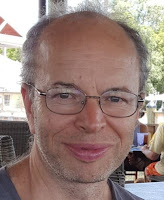
“What Can We Learn about Our Ancestors from Jewish Surnames Adopted in the Russian Empire?” will be the topic of a presentation by scholar and author Alexander Beider for the Sunday, Feb. 27, 2022, virtual meeting of the Jewish Genealogical Society of Illinois at 2 p.m. CST. Register/RSVP for the Zoom session by clicking the button at left.
Some surnames provide information about ancestors who lived well before the 19th century, according to Alexander. This is the case of surnames revealing Jewish “castes” (Cohanim, Levites), those belonging to rabbinical dynasties, and those of other migrants from Central Europe, as well as a small group of names of Sephardic origin. Because of the Ashkenazic tradition of naming children after deceased close relatives (often, ancestors), certain surnames based on given names (patronymics or matronymics) can provide information linking us to those who lived in the Middle Ages.
Alexander Beider holds one doctoral degree in applied mathematics (Moscow Institute of Physics and Technology) and another in Jewish Studies (Sorbonne, Paris). He uses onomastics and linguistics as tools to unravel the history of the Jewish people. He has written a series of reference books dealing with the etymology of Ashkenazic and Sephardic surnames and Ashkenazic given names, all published by Avotaynu Inc. (1993-2019). His book “Origins of Yiddish Dialects,” published by Oxford University Press (2015), sheds light on the early stages of the development of Yiddish. Beider was born in Moscow and currently lives in Paris.
Conference in honour of Anna Ritchie (online)

The Scottish Society for Northern Studies (SSNS) and the Pictish Arts Society (PAS) are delighted to announce Common Ground: A Conference in Honour of Dr Anna Ritchie on 5-6 March 2022.
Common Ground will re-examine some of the richest veins of research discourse contributed to by Anna Ritchie. This multidisciplinary conference explores new research, themes and ideas from archaeology, art history, and onomastics, among others. Join them to investigate the interrelationships of Scotland’s early medieval peoples and cultures as they celebrate Ritchie’s life’s work.
The event will be held virtually to enable as many people to attend as possible.
While Dig It! takes every opportunity to ensure that this information is accurate, we advise that you contact the event organiser before attending the event to avoid disappointment.
Sunday, January 16, 2022
Антропонимика и топонимика в произведениях Л. Кэрролла
Конференция «Творчество Льюиса Кэрролла», посвященная 190-летию со дня рождения писателя
25 февраля 2022 года Горно-Алтайский государственный университет проводит республиканскую научно-практическую конференцию «Творчество Льюиса Кэрролла», посвященную 190-летию со дня рождения писателя.
К участию в конференции приглашаются преподаватели и обучающиеся
образовательных учреждений, аспиранты, исследователи, методисты и учителя-
словесники, библиотечные специалисты.
Приглашаем принять участие в обсуждении следующих вопросов:
- литературный и научный мир Л. Кэрролла;
- игровая поэтика и символизм в творчестве Л. Кэрролла;
- особенности идиостиля Л. Кэрролла;
- лингводидактический аспект произведений Л. Кэрролла;
- ценностные ориентиры в произведениях Л. Кэрролла;
- антропонимика и топонимика в произведениях Л. Кэрролла;
- лирика Л. Кэрролла;
- литературные открытия Л. Кэрролла;
- фильмография произведений Л. Кэрролла.
Конференция будет проходить заочно. Рабочие языки: русский и английский.
Для участия в конференции необходимо отправить до 20 февраля 2022 г. на электронный адрес kdl@gasu.ru с пометкой «Конференция_2022»:
– заявку на участие по утвержденной форме;
– тексты докладов, оформленные согласно требованиям.
Форма заявки и требования к докладам - по ссылке.
По всем вопросам просим обращаться в оргкомитет конференции по адресу электронной почты kdl@gasu.ru или по тел. 89136920605 (Алькенова Саяжан Николаевна).
Кафедра иностранных языков и методики преподавания
Tuesday, January 11, 2022
ANS 2022 schedule is live!
|

|
Thursday, December 30, 2021
P R I H L Á Š K A na 22. SLOVENSKÚ ONOMASTICKÚ KONFERENCIU

P R I H L Á Š K A
na 22. SLOVENSKÚ ONOMASTICKÚ KONFERENCIU s názvom
PRODUKCIA A PERCEPCIA ONYMICKÝCH SYSTÉMOV
Pedagogická fakulta Trnavskej univerzity v Trnave, 5. – 7. september 2022
ĎALŠIE INFORMÁCIE O KONFERENCII
Rokovacie jazyky: slovanské jazyky, angličtina, nemčina.
Forma organizácie podujatia: hybridná (prezenčne a online).
Termín odovzdania abstraktu: prihlášku s abstraktom treba poslať do 31.mája 2022.
Keďže onomastika je interdisciplinárnou vedou, ktorá má prieniky s mnohými jazykovednými, ale aj nejazykovednými odbormi, radi privítame aj príspevky kolegov z nejazykovedných oblastí, ktorí sa pri svojom výskume stretávajú s tvorbou a fungovaním vlastných mien.
Vedecký výbor konferencie:
doc. PaedDr. Ján Bauko, PhD. (Fakulta stredoeurópskych štúdií, Univerzita Konštantína Filozofa v Nitre)
prof. UŁ dr hab. Artur Gałkowski, PhD. (Inštitút romanistiky, Lodžská univerzita v Lodži, Poľsko)
PhDr. Milan Harvalík, Ph.D. (Jazykovedný ústav Ľ. Štúra SAV v Bratislave)
doc. PaedDr. Mária Imrichová, PhD. (Filozofická fakulta, Prešovská univerzita v Prešove)
prof. Mgr. Jaromír Krško, PhD. (Filozofická fakulta, Univerzita Mateja Bela v Banskej Bystrici)
prof. Svitlana M. Pachomovová, DrSc. (Filozofická fakulta, Prešovská univerzita v Prešove)
prof. PhDr. Rudolf Šrámek, CSc., dr. h. c. (Pedagogická fakulta, Masarykova univerzita v Brne, ČR)
prof. Viktor P. Šuľhač, DrSc. (Inštitút ukrajinského jazyka, Ukrajinská národná akadémia vied, Ukrajina)
Mgr. Iveta Valentová, PhD. (Jazykovedný ústav Ľ. Štúra SAV v Bratislave)
prof. PhDr. Pavol Žigo, CSc. (Jazykovedný ústav Ľ. Štúra SAV v Bratislave)
Organizačný výbor konferencie:
doc. PhDr. Juraj Hladký, PhD., doc. PaedDr. Andrej Závodný, PhD., PaedDr. Mária Beláková, PhD., Mgr. Marek Mikušiak, PhD., Mgr. Štefania Vyskočová, Mgr. Dominika Bašistová, Mgr. Patrik Miskovics, Mgr. Tomáš Truban
Thursday, December 16, 2021
The SNSBI Spring Conference 2022 and 2023
An unfortunate - but sadly necessary - announcement about the Spring 2022 conference, from the Hon. Secretary of the SNSBI

Well, 2022 - online, while 2023 -in-person!!!
Friday, December 10, 2021
56th Annual Meeting of the Canadian Society for the Study of Names
Call for Papers:
Canadian Society for the Study of Names (CSSN)
56 th Annual Meeting, held virtually in conjunction with the Congress of the Humanities and Social Sciences of Canada
https://www.federationhss.ca/en/congress/congress-2022
The theme of the 2022 Congress is: “Transitions,” but papers on any onomastic topic are
welcome.
Presentations are allotted 20 minutes, with an additional 10 minutes for questions and discussion.
Please submit an abstract of 150-250 words, including the title of your paper and indicate whether you would like your paper to be considered for this year’s special panel.
Along with your abstract, please provide the full name and affiliation of each author, along with a current email address for each.
You need not be a current member of the society to submit an abstract, but at the time of acceptance of your paper, you must become a member in order to be included in the programme. In addition, all presenters are required to pay registration dues for Congress and for CSSN. Further details will be provided when you are notified of acceptance of your paper.
Please email your abstract to: jonathan.lofft@mail.utoronto.ca ; all abstracts should arrive by February 1st, 2022.
Jonathan S. Lofft (University of Toronto)
Appel à communications:
Société canadienne d'onomastique (SCO)
56e Réunion annuelle virtuellement conjointement avec le Congrès des sciences humaines du Canada
https://www.federationhss.ca/fr/congres/congres-2022
14 et 15 mai 2022
Le thème retenu en 2022 est : « Transitions », toutefois, les communications sur tout autre sujet portant sur l’onomastique sont les bienvenues.
Les communications sont d’une durée de 20 minutes et sont suivies d’une période de 10 accordées aux questions et à la discussion.
Veuillez soumettre un résumé ne dépassant pas 200 mots, titre inclus. Indiquez les noms et affiliations des auteurs de la communication sans omettre d’inclure l’adresse courriel de chacun.
Bien qu’il ne soit pas indispensable d’être membre de la Société pour soumettre une communication, il est toutefois indispensable d’en devenir membre pour être inscrit au programme. Tous les participants sont tenus de débourser les coûts de leur inscription au Congrès, ainsi qu’à la SCO. Des informations additionnelles vous seront acheminées lors de l’envoi des avis d’acceptation ou de refus de communications.
Veuillez faire parvenir votre résumé par courriel à : jonathan.lofft@mail.utoronto.ca. Tous les résumés devront être soumis au plus tard le 1er février 2022.
Jonathan S. Lofft (University of Toronto)
Sunday, December 5, 2021
Wednesday, December 1, 2021
Former President of the Galician Association of Onomastics elected as full member at the Royal Galician Academy
 |
| Photo |
She is a well-known researcher in the fields of Galician anthroponymy, toponymy, and lexicography.
The Royal Galician Academy will hold on the 11th December the extraordinary public session for Ana Boullón Agrelo to become a full member of the institution. The event will take place at 12:30 pm at the Teatro Cine Elma in Pobra do Caramiñal (Rúa Rafael Calleja, 51), the philologist's hometown.
The new full member will give a lecture entitled "Todos os nomes: identidade, pobo, país". Prof. Ana Boullón Agrelo will occupy the vacant chair after the passing of Xosé Luís Franco Grande in March 2020.
Since 2012 Ana Boullón Agrelo has been Professor of Galician Philology at the University of Santiago de Compostela (Instituto da Lingua Galega) and member of the Onomastics Seminar at the Royal Galician Academy.

 |
| Photo |
Currently, also on behalf of the Royal Galician Academy, she is coordinating the preparation of the Dictionary of Galician Surnames and the publication of the Guide on Galician Surnames, which will be available on the website of the Royal Galician Academy.