Showing posts with label onomastic atlas. Show all posts

Saturday, June 5, 2021

ADOPIA: Atlas Digital Onomastique de la Peninsule Ibérique Antique

 link 

Personal names constitute a fundamental source for our understanding of ancient societies.  Onomastics reveal much about an individual’s cultural, social and geographic identity. Studying them throws important light on the processes of cultural change that affected the inhabitants of the Roman Empire as well as on family relations and the social organization of civic communities across the Roman provinces. 


The Iberian peninsula has long been a fertile area for the study of ancient onomastics. It has benefited from a long-standing tradition of research by major scholars such as María Lourdes Albertos Firmat and Jürgen Untermann and from a landmark publication: the Atlas antroponímico de la Lusitania romana, published in 2003 by the Institut Ausonius (Université Michel de Montaigne-Bordeaux III) and the Fundación de Estudios Romanos (Museo Nacional de Arte Romano, Mérida), the result of ten years of research by the « Grupo Mérida », an international research network comprising colleagues from Spain, Portugal, France and Canada. 

This work, which marks a fundamental advance in research on the onomastics of the Roman Empire, provides the scholarly community with an indispensable research tool. Based on the information available until 2002, its 339 maps and 2030 different names illumine in a specific and original manner the social fabric of the province of Lusitania in the High Empire. 

This web-site ADOPIA represents the continuation of this project. It combines the results of cutting-edge epigraphic research with all the advantages of new digital technologies, since its digital format allows new epigraphic data to be rapidly incorporated, resulting in a constant updating of the material.

The numerous possibilities that a Digital Humanities approach offers add considerable value and impact to the information now available, since ADOPIA allows both simple and advanced searches of names and individual naming practices attested in the provinces of Roman Hispania, as well as immediate mapping of the results of such searches. 

After uploading the material from Lusitania, ADOPIA will introduce onomastic data from the two other Hispanic provinces. The research team is currently working on the material from Baetica.

The work currently in process forms part of a research project funded by the Social Sciences and Humanities Research Council of Canada / Conseil des recherches en science humaines du Canada (SSHRC/CRSH): “Names and Identity in Roman Spain: the ADOPIA project” (Partnership Development Grant #890-2017-0039). This major support is supplemented by that provided by ADOPIA partner institutions the Faculty of Liberal Arts and Professional Studies (York University), the Institut Ausonius (CNRS – Université Bordeaux-Montaigne), the Centro CIL II (Universidad de Alcalá) and the Archivo Epigráfico de Hispania (Universidad Complutense, Madrid). 

Monday, July 11, 2016

Atlas Digital Onomastique de la Péninsule Ibérique Antique

http://ausonius-dh.u-bordeaux-montaigne.fr/ADOPIA/index.php


Présentation du projet

Les noms de personne sont une source fondamentale de l’histoire des sociétés anciennes, parce que l’onomastique est le reflet de l’identité culturelle, sociale et géographique des individus. Son apport est donc essentiel pour analyser les relations familiales et l’organisation sociale des communautés civiques provinciales et pour mesurer les transformations culturelles qu’ont connues au fil des siècles les populations de l’Empire romain.
Sur ce point, la péninsule Ibérique a bénéficié d’une longue tradition de recherche illustrée par les travaux de grands savants comme María Lourdes Albertos Firmat et Jürgen Untermann, et, en 2003, par l’Atlas antroponímico de la Lusitania romana, publié par l’Institut Ausonius (Université Michel-de-Montaigne-Bordeaux III) et la Fundación de Estudios Romanos (Museo Nacional de Arte Romano, Mérida) et réalisé par le « Grupo Mérida », réseau de recherche international qui a réuni des chercheurs d’Espagne, du Portugal, de France et du Canada.
Résultat d’une décennie de recherche, cet ouvrage qui a fait date, représente une étape fondamentale dans la recherche onomastique sur l’Empire romain. Il met à la disposition de la communauté scientifique un instrument de travail indispensable. Partant de toutes les informations disponibles jusqu’à 2002, il offre, en 339 cartes et en 2030 noms recensés, un éclairage particulier et original sur la société de la province de Lusitanie du Haut-Empire.
ADOPIA est la continuation de ce projet, dans une version digitale et dynamique qui combine une recherche épigraphique innovante et tous les avantages des nouvelles technologies puisque le format digital permet l’introduction rapide de toutes les nouveautés épigraphiques, c’est-à-dire la  constante actualisation des données.
Les possibilités qu’offrent les humanités numériques ajoutent ainsi une valeur et un impact considérables aux informations disponibles, car ADOPIA propose des recherches simples et avancées sur les noms et les dénominations de personnes attestés en Lusitanie, dont le détail est aussi immédiatement accessible par la cartographie qui les accompagne. Dans un futur proche, ADOPIA accueillera les données onomastiques de deux autres provinces hispaniques, la Bétique et l’Hispanie citérieure.

Équipe de recherche

Équipe de recherche ADOPIA (Lusitania)


Directeurs :

  • Jonathan EDMONDSON – Milagros NAVARRO CABALLERO

Responsable technique :

  • Nathalie PRÉVÔT

Membres  :

  • Jean-Pierre BOST (Institut Ausonius, CNRS-Université de Bordeaux-Montaigne, Labex LaScArBx)
  • Jonathan EDMONDSON (York University / Université York, Toronto)
est professeur d’histoire romaine à l’Université York (Toronto). Son activité scientifique se centre dans l’étude de la histoire sociale, économique et culturelle de l’Hispanie romaine, surtout la Lusitanie, et dans l’épigraphie latine de la péninsule Ibérique, en particulier, d’Augusta Emerita (Mérida). Il est auteur des ouvrages Imagen y Memoria. Monumentos funerarios con retratos en la colonia Augusta Emerita (avec T. Nogales Basarrate et W. Trillmich, 2001) et Granite Funerary Stelae from Augusta Emerita (2006). Au même temps il a récemment édité (en collaboration avec Christer Bruun) The Oxford Handbook of Roman Epigraphy (2015). Il travaille actuellement dans la préparation du fascicule sur les inscriptions funéraires urbaines d’Augusta Emerita pour la deuxième édition du C.I.L. II et da,s la publication d’un corpus de toutes les nouvelles inscriptions funéraires découvertes depuis 1990 dans les fouilles urbaines de Mérida.  En outre, il a publié une série d’articles sur la famille romaine et les spectacles publics dans le monde romain. Il est actuellement co-directeur du projet ADOPIA.  
  • Joaquín GORROCHATEGUI (Universidad del Pais Vasco)
  • Amílcar GUERRA (Universidade de Lisboa)
  • Rosario HERNANDO SOBRINO (Universidad Complutense de Madrid)
  • Milagros NAVARRO CABALLERO (Institut Ausonius, CNRS-Université de Bordeaux-Montaigne, Labex LaScArBx)
est Directeur de Recherche au CNRS. Son activité scientifique se centre dans l’étude des sociétés antiques de la péninsule Ibérique  et des Gaules, à partir d’une méthode essentiellement épigraphique. Outre la publication des corpora épigraphiques comme celui de Bordeaux, Labitolosa, Teruel ou Bilbilis, ses travaux de recherche se sont surtout occupés de l’onomastique antique et des élites locales, en particulière des femmes. Actuellement, elle est directeur scientifique de la base de données épigraphique PETRAE, avec laquelle elle collabore avec la communauté internationale dans la fédération de base de données EAGLE. Elle est la responsable de la compilation et l’étude de l’épigraphie latine de l’Aquitaine antique et de sa publication dans la collection ILA : Inscriptions latines de l’Aquitaine. Elle s’occupe concrètement d’étudier les inscriptions des Bituriges Cubi. Elle dirige la réalisation de l’Atlas anthroponymique de l’Aquitaine antique, ainsi que du projet ADOPIA.
  • Juan José PALAO VICENTE (Universidad de Salamanca)
  • Manuel SALINAS DE FRÍAS (Universidad de Salamanca)
  • José María VALLEJO RUIZ (Universidad del Pais Vasco)
  • Mercedes ORIA SEGURA (Universidad de Sevilla)
  • Armando REDENTOR (Centro de Investigação de Montanha (CIMO), Bragança) 

Équipe de recherche de l’Atlas antroponímico de la Lusitania romana (Merida - Bordeaux, 2003)

  • Ángela ALONSO SÁNCHEZ (Universidad de Extremadura)
  • Jean-Pierre BOST (Institut Ausonius, CNRS-Université de Bordeaux-Montaigne, Labex LaScArBx)
  • Enrique CERRILLO Y MARTÍN DE CÁCERES (Universidad de Extremadura)
  • Julián DE FRANCISCO MARTÍN (Universidad de Oviedo)
  • José D’ENCARNAÇÃO (Universidade de Coimbra)
  • Jonathan EDMONDSON (York University, Toronto)
  • José María FERNÁNDEZ CORRALES (Universidad de Extremadura)
  • Marta GONZÁLEZ HERRERO (Universidad de Oviedo)
  • Joaquín GORROCHATEGUI (Universidad de País Vasco)
  • Marta JIMÉNEZ LOSA (Universidad de Cantabria)
  • José Luis MELENA (Universidad de País Vasco)
  • Milagros NAVARRO CABALLERO (Institut Ausonius, CNRS-Université de Bordeaux-Montaigne, Labex LaScArBx)
  • Mercedes ORIA SEGURA (Universidad de Sevilla)
  • Juan José PALAO VICENTRE (Universidad de Salamanca)
  • José Luis RAMÍREZ SÁDABA (Universidad de Cantabria)
  • Manuel SALINAS DE FRÍAS (Universidad de Salamanca)
  • Alain TRANOY (Université de Poitiers)
  • José María VALLEJO RUIZ (Universidad de País Vasco)
  • †João Luís Inês VAZ (Universidade Católica de Viseu)

Friday, September 25, 2015

Атлас варіантів власних особових імен Волинського Полісся

https://shop.eastview.com/results/item?sku=5119189

Атлас варіантів власних особових імен Волинського ПоліссяPrint AtlasesPrice: $ Availability: Inquire 

Atlas variantiv vlasnykh osobovykh imen Volyns'koho Polissia Atlas of Proper Names of the Volyns'koho Polissia Region 

Атлас варіантів власних особових імен Волинського Полісся 
  • Product Details

    Product #
    Coverage
     
    Author(s)
    Country
    Ukraine 
    City
    Lutsk 
    Language
    Ukrainian 
    ISBN
    9786177181087 
    Date of Publication
    2014 
    Pages
    129 
    Publisher
    Cover Type
    Soft cover 
    Subject
    Linguistic Atlas
     
  • Product Details in Original Language

  • Description

Thursday, August 6, 2015

Atlas niedersorbischer Zunamen


Walter Wenzel:  Atlas niedersorbischer Zunamen. Nach Quellen des 14. bis 18. Jahrhunderts. Domowina-Verlag, Bautzen, 2015. 159 S.  
Das bisherige Atlaswerk zur sorbischen Anthroponymie aus der Feder des Verfassers  wird fundiert durch einen speziellen Band zum Niedersorbischen (Nso.) erweitert und vervollständigt. Seit den Forschungen von Ernst Mucke zum Nso. ist das eine die slavistische Forschung nun mit historischer Vertiefung bereichernde Edition und ein Unikat zugleich.
Anlage und Aufbau sind platzsparend, verständlich und mit ausreichend Erläuterungen versehen für eine breite interessierte Leserschaft bestimmt. Nach einer konzentrierten Einleitung (S. 9-12)  folgen 70 Karten im Mehrfarbendruck. Die jeweils rechts erscheinenden Karten werden auf der linken Seite mit einem informativen Kommentar erläutert. Damit ist eine praktische Handhabung gesichert.
Der Atlasband ist zugleich als Nachschlagewerk geeignet, denn vorn (S.17-19) sind alle behandelten bzw. erfassten Personennamen alphabetisch und mit Seitenangabe ausgewiesen. Dieses Register gleich nach Literaturverzeichnis und Auflösung aller Abkürzungen sowie Zeichen (S. 13-16) erleichtert die Benutzung durch die Möglichkeit einer raschen Orientierung zum Inhalt.  
Das knapp gehaltene Inhaltsverzeichnis (S. 5) ermöglicht einen ersten Überblick zur Anordnung bzw. inhaltlichen Abfolge der kartierten Zunamen (ZuN) von S. 20 – 159. „ZuN aus slawischen Rufnamen“ sind mit 16 Karten vertreten, „ZuN aus Amts- und Berufsbezeichnungen“ mit 8 Karten. Lediglich zu dem umfangreichsten Part „ZuN  aus Übernamen“ mit über 40 Karten ist dem Benutzer eine Ergänzung zu empfehlen, da sonst z. B. die Karten zu ZuN nach Verwandtschaftsbezeichnungen, Tier-, Fisch- und Pflanzenbezeichnungen sowie auch apotropäische Rufnamen in ZuN  etwas schwer zu finden sind. Doch das gilt nur für den Benutzer, der von Sachgruppen ausgehend den Atlas in die Hände nimmt. „ZuN nach der Wohnstätte“ beschließen die Sachgruppen mit einer Karte (S. 152).
Wesentlich und sehr hilfreich ist, dass zu den kartierten ZuN immer die etymologischen Zusammenhänge im Kommentarteil erwähnt werden. Außerdem werden auch als Zeichen der fortschreitenden Erkenntnisse aus jahrzehntelanger Forschung des Autors etymologische Präzisierungen vorgenommen wie z. B. im Text zu Karte 21 zum ZuN Rĕzak. .
Auf verschiedenen Karten wiederkehrend fallen auch die für ZuN zutreffenden  Lehnbeziehungen auf. Die Lehnwortforschung speziell zu Entlehnungen aus dem Deutschen ins Nso. findet daher ebenfalls Ansätze für räumliche Verbreitung und sicher auch zu noch anderen sie interessierenden Fragen.
Die durchgehend beachteten und erwähnten Verbindungen zwischen den anthroponymischen Basen, ZuN und deren Vorkommen in Siedlungsnamen bringen neue Einblicke, erwecken also auch das Interesse der Namenforschung über die ZuN-Forschung hinaus.
Dem außergewöhnlichen Reichtum slawischer Suffixe in Eigennamen wird ebenfalls Rechnung getragen. Mit drei speziellen Karten (S. 154-159) zu den besonders häufigen „Personennamensuffixen“ wird eine einmalig schnelle Orientierung zum Nso. geboten. Die Verbreitung von suffigierten ZuN-Bildungen lässt wiederum auch Rückschlüsse auf die Geschichte von KurzN aus Rufnamen zu. Und darüber hinaus ist die Stratigraphie der KurzN wie der ZuN am Beispiel des Nso. wiederum auch von Interesse für Vergleiche mit der offenbar zeitgleichen Entwicklung von KurzN sowie auch ZuN im Deutschen und ihrem Festwerden als Zweitnamen auf dem Weg zum erblichen Familiennamen.
Insgesamt versteht sich der mit größter Sachkenntnis vom besten Kenner sorbischer Personennamen in unermüdlicher akribischer Arbeit als Ergebnis vorgelegte  Atlasband als sowohl ganz gesondert nutzbar als auch als integrativer Bestandsband zu den bisher schon vor allem im Domowina-Verlag in Bautzen erschienenen umfangreichen Nachschlagewerken des Autors. Für die slavistische Forschung hat Professor Wenzel mit weit vor Einsetzen der sorbischen schriftsprachlichen Überlieferung zurückgreifendem Quellenmaterial eine überaus wichtige Zusammenschau zur Genesis der Familiennamen im Nso. geliefert und damit zugleich eine konzentrierte Einsicht in Namenbildungsprozesse und die sprachliche Entwicklung in einem Teilbereich des Nso. ermöglicht. Dem Verlag gebührt Anerkennung und Dank für die Edition  in bester Qualität. Respekt gilt Herrn Andreas Häffner (Leipzig) für die digitale Aufbereitung der Karten und so erwiesene  geduldige und verständnisvolle Mitwirkung zur Veranschaulichung sprachhistorischer Anliegen.  
Univ-Prof. Dr. Karlheinz Hengst.
Der Band erscheint im Domowina Verlag. Die genauen Titeldaten entnehmen Sie bitte dem Katalog der Deutschen Nationalbibliothek.

Thursday, April 2, 2015

Invitation to the ICC2015 Pre-Conference Symposium on Atlases, Toponymy and the History of Cartography

http://icaci.org/invitation-to-icc2015-pre-conference-symposium-at-ibge/


The ICA Commission on Atlases, the Joint ICA Working Group and IGU Commission on Toponymy and the ICA Commission on the History of Cartography invite you to a joint pre-conference Symposium on Atlases, Topography and the History of Cartography at the Brazilian Foundation of Geography and Statistics (IBGE) in Rio de Janeiro on 19–21 August 2015.
The symposium will include two days of scientific sessions and one day of technical visits to the Fundacao Bibliotheca Nacional and to the Museu Naval.
Contact: Dr. Ana Cristina da Rocha Bérenger Resende (local organizer)
More details will be available soon.


Pre-Conference Symposium on Atlases, Topography and the History of Cartography (27th International Conference of the International Cartographic Association)

 –  
Rio de Janeiro, Brazil
Organisation: ICA Commission on the History of Cartography
The 27th International Conference of the International Cartographic Association will take place in Rio de Janeiro, Brazil from 23 to 30 August 2015. In order to foster local interest and provide delegates visiting Brazil with the opportunity to meet local colleagues, the
  • ICA Commission on Atlases
  • ICA WG on Toponymy, and
  • ICA Commission in the History of Cartography
will present a Joint two-day pre-conference Symposium on Atlases, Topography and the History of Cartography at the Brazilian Foundation of Geography and Statistics (IBGE) in Rio de Janeiro on 19-20 August 2015.

Saturday, March 21, 2015

Upgrades for the Surname Atlas

http://www.archersoftware.co.uk/satlas01.htm

logo

Surname Atlas

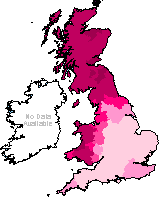
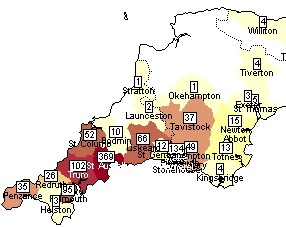
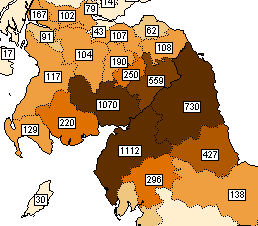
The British 19th Century Surname Atlas is a fully interactive CD-Rom product that displays floodfill-style distribution maps for all of the surnames and forenames found in the 1881 census of England, Scotland and Wales. Using the program is simplicity itself: just insert the CD in your drive and wait for it to load. Then enter a surname in the data entry box and hit enter. A map for that surname appears almost instantly, similar to the example shown here for the surname Cunnington. For more examples, see the Example Maps page.


These are some of its features:
  • Display any of the 400,000+ surnames & variants that appear in the 1881 census. In many cases the maps will indicate the probable geographical origin of a surname.
  • Similarly plot any of the 160,000+ forenames, and view their popularity through time.
  • Aggregate data by county or district.
  • Plot data as actual numbers, or a density ('per 100,000' of the population).
  • Include any collection of name variants on each map.
  • Investigate surname elements using wildcards (e.g. *thorpe)
  • Display lists of surnames characteristic of particular counties
  • Show one or four surname maps at any one time.
  • Zoom and pan the maps to frame exactly the area you want to see.
  • Configure colours schemes, boundaries & numeric ranges.
  • Print maps, or export to the Windows clipboard.

The original version of Surname Atlas was launched in April 2003 and the current version in March 2015. See the Upgrades page to see what's changed.
It's attractively priced at only £15 and is available direct from Archer Software - see Supply Details.

System Requirements

These are fairly modest - a PC running Windows 8/7/Vista/XP/98, CD-Rom drive, 16Mb memory, screen set to 1024x768 pixels or greater.