Showing posts with label Place-names changes. Show all posts

Saturday, April 23, 2016

Namensänderung: Tschechien künftig auch ohne Republik

http://www.faz.net/aktuell/politik/ausland/europa/namensaenderung-tschechien-kuenftig-auch-ohne-republik-14178361.html

Die Tschechische Republik hadert mit ihrem Namen. Als „Chicken Republic“ bezeichnet und mit Tschetschenien verwechselt, hat man sich jetzt auf einen zweiten Namen geeinigt. Zufrieden sind damit noch längst nicht alle.

                                        von , Wien        


Themenpaket Wechsel der EU-Ratspräsidentschaft - Prag

                                                     
Der tschechische Präsident lud die Spitzen der Koalition in die Prager Burg, um den Vorschlag zu diskutieren.

Ein Vierteljahrhundert lang debattierten tschechische Politiker, Historiker und Intellektuelle darüber, ob es nicht eine prägnantere Bezeichnung für ihren Staat gäbe als „Česká Republika“ (Tschechische Republik). Eine alle zufriedenstellende Einigung gibt es bis heute nicht, aber jetzt steht immerhin fest, dass „Česko“ (Tschechien) der künftig zweite offizielle Staatsname ist.
                                                    
Ein entsprechender Vorschlag des sozialdemokratischen Außenministers Lubomír Zaorálek harrte am Donnerstag nur noch der Genehmigung durch die höchsten Repräsentanten des Staates, die Präsident Miloš Zeman am Nachmittag in seinen Amtssitz auf der Prager Burg geladen hatte. Es bestand kein Zweifel darüber, dass der Präsident, der Ministerpräsident, der Verteidigungsminister und die Vorsitzenden der beiden Häuser des Parlaments damit einverstanden sein würden, die Vereinten Nationen in einem Brief vom Wunsch der Tschechischen Republik in Kenntnis zu setzen, „Česko“, Englisch: „Czechia“, als Zweitnamen in den offiziellen UN-Sprachen (Arabisch, Chinesisch, Englisch, Französisch, Russisch und Spanisch) zu verwenden.


Zu den Pionieren in der Verwendung des Kurznamens zählt Präsident Zeman, der ihn erstmals schon vor drei Jahren während eines Staatsbesuches in Israel verwendete. „Czechia“ sei besser als der umständlichere und „unfreundliche“ lange Staatsnamen, sagte Zeman damals.

Entgegen einem gelegentlich kolportierten Missverständnis ist nicht „Česko„das tschechische Wort für Böhmen, dafür steht das Pluralwort „Čechy“. Bei „Česko“ handelt sich dennoch nicht um eine Wortneuschöpfung, denn der Begriff fand bereits Mitte des 19. Jahrhundert Eingang in die tschechische Sprache und geriet erst später in Vergessenheit. Der Historiker und Politiker František Palacký verwendete ihn für die tschechisch besiedelten Gebiete Böhmens, als er auf dem Kremsier Reichstag (1848/49) eine Föderalisierung der Habsburgermonarchie nach streng ethnischen Kriterien vorschlug.

Der von Hitler genutzte Begriff „Tschechei“ bleibt verpönt

Es waren weniger historische, als pragmatische Überlegungen, die Zaorálek zu seiner Initiative veranlassten. Es sei nicht gut für ein Land, wenn es keine klar definierten Symbole hat oder nicht einmal klar sagt, wie es heißt, sagte der Außenminister. Der kurze Name erleichtere es, das Land und seine Produkte international zu vermarkten. Auf seinen Reisen habe er außerdem feststellen müssen, dass „Czech Republic“ gelegentlich „verstümmelt“ werde. Um welche Verstümmelungen es sich dabei handelte, sagte Zaorálek nicht. Ein tschechischer Diplomat sagte dieser Zeitung einmal, nicht nur die Verwechslung mit Tschetschenien („Chechen Republic“) liege nahe, er habe sogar schon einmal „Chicken Republic“ hören müssen.

Damit ist es nun vorbei. Fest steht, dass der abwertend empfundene deutsche Begriff „Tschechei“, der die Tschechen an Hitler erinnert, verpönt bleibt. Auf deutsch heißt „Česko“ nur „Tschechien“, ein Begriff, der sich in deutschen und österreichischen Medien bereits weitgehend durchgesetzt hat, aber eben nicht offiziell war.

Kritik an der Namensgebung gab es nicht nur seitens der Opposition, sondern auch in der Regierung. Finanzminister Andrej Babiš, der Nationalität nach Slowake, äußerte die Befürchtung, dass sich „Czechia“ international kaum durchsetzen dürfte. Der christlich-demokratische Kulturminister Daniel Herman sagte, der kurze Name klinge nicht gut, aber ihm falle auch kein besserer ein. Strikt dagegen sprach sich der frühere Außenminister Karel Schwarzenberg aus. Er plädierte für „Bohemia“ und berief sich dabei auf eine jahrhundertealte Geschichte. Böhmen allerdings, die Heimat von Tschechen und Deutschen, ist mit der Vertreibung der Deutschen nach dem Krieg untergegangen. Geblieben ist „Česko“, der tschechisch besiedelte Landesteil, der sich auf das ganze Land ausdehnte.


Friday, February 19, 2016

Bombay mix-ups: the politics of placename changes

http://social-media-news.com/link/1122549_bombay-mix-ups-the-politics-of-placename-changes

A few days ago, before hitting the headlines with the news that his newspaper would stop printing next month and become an online-only publication, the London Independent‘s editor Amol Rajan announced that henceforth the paper would stop calling India’s most populous city, Mumbai, and revert to using its previous name of Bombay.

Explaining the move to Dan Damon on the BBC World Service, Rajan said that he wanted to use the name Bombay as a symbol of the city having been a ‘melting pot of different cultures’ for most of its history. It is this tradition, Rajan has said, which he considers as being harmed by the Hindu nationalist drive to rename the city in the 1990s – an ideology shared by the governing BJP and India’s prime minister Narendra Modi:
In choosing Bombay over Mumbai, what I’m trying to do is to say that India’s better tradition is one that’s open to the world, and what’s at stake with Bombay as a city is the whole idea of a cosmopolitan port city that is the gateway to and of India, and I think that if you choose the word Mumbai instead of Bombay you collude with the nationalists in closing Bombay off from the world, and I think that that’s a very bad thing to do.
In the same interview, Rajan half-jokingly added that he hoped that his familial connections with the city ‘might protect me a little bit.’ The Independent‘s editor was himself born on India’s second most populous city of Kolkata – although it was still known as Calcutta at the time, in 1983. On India’s west coast, the name Mumbai was officially adopted for the city in 1995 by the far-right party Shiv Sena, which had been in power in the municipal council at the time. The name derives from the Hindu goddess Mumbadevi, and inhabitants had been using Mumbai for many years previously – although people in the city tend to use Mumbai and Bombay interchangeably in conversation. The name Bombay, meanwhile, is thought to derive from Bom Bahia, the Portuguese words for Good Bay.

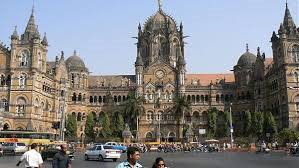
The Chhatrapati Shivaji railway station, Mumbai (or is it Bombay?)

Even before the rise of Hindu nationalism, there had already been moves towards changing placenames in India, to make them sound less like attempts by English speakers to pronounce the names. Thus, Bangalore became Bengaluru, Calicut became Kozhikode, and Bulsar became Valsad.
Thus far, reaction in India to the Independent‘s Mumbai/Bombay decision has not been overly hostile – although it has been critical. One critic tweeted:
Might be better if @amolrajan took a strong line against actual Hindu extremism rather than just the name of city
…while another commented:
“We shall henceforth refer to Mumbai as Bombay” – says The Independent, a newspaper printed in Londonium in Britannia.
Rajan’s idea that calling Mumbai by a name decided for it by ultra-nationalists effectively helps to do their work for them has essentially been the same argument for calling Aung San Suu Kyi’s country, Burma. Since 1989 the military dictatorship in charge of the place has insisted that the country’s proper name is Myanmar, and broadcasters and journalists are increasingly using that name instead of Burma. Whether they will continue to do so could well depend on how the junta copes with the ongoing fallout from Suu Kyi’s NLD’s stunning victory in last autumn’s parliamentary elections.

However, this argument doesn’t always win through: nationalism was also behind the 1972 announcement by the government in Colombo that their nation of Ceylon would henceforth be known as Sri Lanka, and even in the dark days of former president Rajapaksa’s bloody crushing of the LTTE in 2009 nobody thought of calling the country anything other than Sri Lanka. Similarly, an ever-confident People’s Republic of China has successfully got the rest of the world to adapt to changes in placenames in that country: thus, virtually every writer and commentator freely refers to Beijing, Guangzhou and Nanjing, rather than Peking, Canton, and Nanking. For the same reason, for all the valid criticism of the excesses of the Turkish state, nobody thinks to call the cities of Ankara, Izmir, and Istanbul by their previous names of Angora, Smyrna, and Constantinople.

It is not just in developing countries that drives to change placenames can take place. In Australia, for example, people are increasingly referring to the enormous sandstone monolith near Alice Springs by its Aboriginal name of Uluru, instead of the more colonial-sounding term Ayers Rock. Similarly, more people are referring to Australia’s nearest neighbour as Aotearoa New Zealand – giving reference to that country’s Maori name (which in English means “Land of the Long White Cloud”).

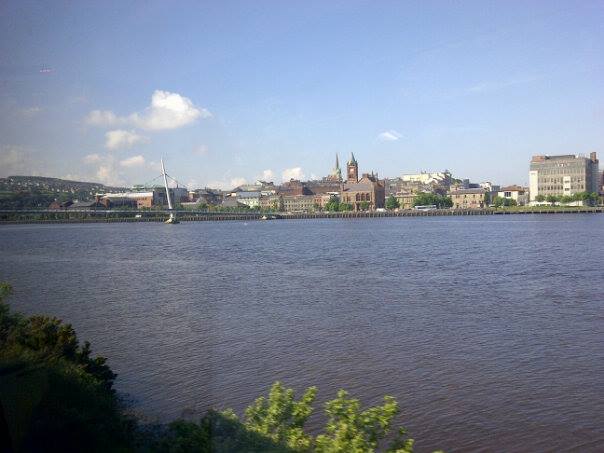
Then again, placenames are forms of symbols, and when they are changed it can have an impact on the symbolism. The Derry/Londonderry naming dispute is a classic case in point, and I know it has been given a fair airing on Slugger on several occasions already, but it is worth looking at again. Put simply, Unionists prefer the term Londonderry and nationalists Derry, both because of the symbolism of the British connection implied in the “London” part of the name. The local authority’s name was altered to Derry City Council in 1984, but the dispute is continuing, and the chances are that the name Londonderry will continue to be used by Unionists even if the Queen can be persuaded to change the city’s royal charter.

A view of Derry (or is it Londonderry?)

Ultimately, when placenames are changed for whatever reason, the evidence from India, China, Sri Lanka, Turkey and beyond is that most people get used to the new name without too much difficulty. It does not always turn out that way, however, but it’s a fairly safe bet that all of Derry’s names are more likely to survive than that of Bombay.

Friday, June 20, 2014

Symposion on Place-names changes

Call for Papers 
Symposion 
on 
Place-names changes 
organised by 

Joint IGU/ICA Commission/Working Group on Toponymy 
Accademia Nazionale dei Lincei 

Rome [Roma], Italy 
November 17-18, 2014


Dear colleague,

You are cordially invited to take part in the international scientific symposion on place-names changes in Rome, 17-18 November 2014, organized by the Joint IGU/ICA Commission/ Working Group on Toponymy and the Accademia Nazionale dei Lincei.

Welcome to the International Cartographic Association


Topic of the symposion

Languages are promoted by political powers and dependent on them. In a historical dimension they come and go depending on political support. Places names as elements of language are part of this historical fluctuation. Due to their symbolic role as markers of geographical features, territories and space-related identities, however, they are even more exposed to political change. Already the replacement of the dominant political or cultural force within a given society can result in place-names changes. A recent example is the rise and fall of Communism in Eastern Europe. But also the commercialisation of our societies has its impact on toponymy. New commercial names replace traditional ones prompting the question, whether place names aren’t to be regarded as a part of the cultural heritage and to be protected for this very reason. Inversions of the namescape (like in South Africa) are certainly caused by a change of dominant political forces. But standardization and public recognition of places names of indigenous and non-dominant groups can also result from new cultural streams and attitudes in a given society like in Canada, where strong efforts are made to codify the languages of indigenous peoples and to display their place names subsequently in public space.

Place-names changes often affect street names and in general names in urban space, since many of them have commemorative function and are thus closely related to certain historical periods and powers. But also names of populated places and especially cities are frequently subject to names changes due to the prominence of these features and their importance in politics, culture and economy. Special cases are names of administrative units of all spatial levels. They are intimately connected with the dominant political system and accordingly exposed to change.

Thus, the topic of our symposion is highly space-related and geographical, but has also very significant historical, sociological and political dimensions, while linguistic aspects like the gradual adaptation of names by other languages, the preservation of antiquated name forms or names changes by orthographic reforms are not as much in the foreground.

Potential subtopics (This is not meant as a structure of the symposion, but as a list of
subtopics which could be addressed by the papers – without claiming to be complete)
- Reasons and driving forces for/of place-names changes
- The meaning of place names in the political context
- Place names as identity markers
- The role of political changes/inversions with place-names changes
- New societal and cultural directions and streams as reasons for place-name changes
- Political, economic and other intentions behind place-names changes initiated by public authorities
- Commercialisation of the namescape
- Place names as cultural heritage – motives to protect them
- Names categories predominantly affected: street names, names of populated places, names of administrative units…
- Place names in urban space (e.g. street names) as subjects of change
- Change with names of subnational administrative units
- Place names change with other geographical features (populated places, seas…)
- Types and directions of place-names change
- Naming motives for new names
- Legislative and other regulations as regards naming and renaming
- Commemorative naming
- Comparative views on place-names changes in different parts of the world (synchronic surveys) 
- Comparative views on place-names changes in different periods of history (diachronic surveys) 
- Effects of place-names changes on administration, education, science,… 
- Attitudes and reactions of the population concerned by place-names changes (empirical studies) 


Scientific council and paper selection committee
 Prof. Vincenzo CAFFARELLI, International Council on Onomastic Sciences (ICOS)
Prof. Giuseppe GALASSO, National Member of the Accademia Nazionale dei Lincei
Prof. Peter JORDAN, Austrian Academy of Sciences and United Nations Group of Experts on
Geographical Names (UNGEGN)
Prof. Cosimo PALAGIANO, Universitá La Sapienza, Corresponding member of the Accademia
Nazionale dei Lincei
Prof. Paolo POCCETTI, University of Rome – Tor Vergata
Prof. Domenico SILVESTRI, University of Naples “L'Orientale”


Venue 
 Accademia Nazionale dei Lincei, Auditorium, Villa Farnesina, via della Lungara 230, I-00165, Roma, Italy


Deadlines
 31 May 2014: Registration and announcement of papers. No registration fee is requested.
Please, find the registration form enclosed and send it to peter.jordan@oeaw.ac.at and
cc to cosimo.palagiano@uniroma1.it

15 September 2014: Submission of abstracts (max. 400 words)