Showing posts with label placenames. Show all posts

Monday, August 12, 2024

New ICOS Working Group

 ICOS 


The International Council of Onomastic Sciences entertains a new Working Group on Toponymy with the task to promote research on toponymy with a holistic approach, i.e. from the perspectives of all sciences engaged and relevant in onomastics. 

In detail, the Working Group has the following tasks:

  • (1) Propose and organize sessions on place names in the framework of relevant conferences and congresses;
  • (2) Organize symposia on toponymy in cooperation with local host institutions;
  • (3) Develop, support and cooperate in toponymic research and book projects;
  • (4) Cultivate international cooperation with relevant global organizations like the International Cartographic Association (ICA) and the International Geographical Union (IGU) represented by the Joint ICA/IGU Commission on Toponymy, as well as the United Nations Group of Experts on Geographical Names (UNGEGN).

The Working Group has a registered membership, a chair and a vice-chair. Its members are to be members of ICOS or to gradually assume ICOS membership. The founding chair is Peter Jordan (Austria). The first business meeting during the 28th ICOS Congress in Helsinki/Helsingfors will regularly elect chair and vice-chair.

Registered members (by 1 August 2024)

  • (1) Akbari, Fatemeh (Austria)
  • (2) Alphey, Tristan (United Kingdom)
  • (3) Atoui, Brahim (Algeria)
  • (4) Baker, John (United Kingdom)
  • (5) Bartos-Elekes, Zsombor (Romania)
  • (6) Bijak, Urszula (Poland)
  • (7) Bölcskei, Andrea (Hungary)
  • (8) Caiazzo, Luisa (Italy)
  • (9) Crljenko, Ivana (Croatia)
  • (10) du Plessis, LT (South Africa)
  • (11) Felecan, Oliviu (Romania)
  • (12) Ferland, Yaïves (Canada)
  • (13) Garcia Quera, Núria (Spain)
  • (14) Gautier, Laurent (France)
  • (15) Geršič, Matjaž (Slovenia)
  • (16) Gînsac, Ana-Maria (Romania)
  • (17) Koch, Florian (France)
  • (18) Herzen, Andrey A. (Russian Federation)
  • (19) Herzen, Olga (Russian Federation)
  • (20) Hionidis, Pandeleimon (Greece)
  • (21) Jordan, Peter (Austria)
  • (22) Kang, Peter (China-Taiwan)
  • (23) Kim, Sun-Bae (Republic of Korea)
  • (24) Loth, Chrismi Rinda (South Africa)
  • (25) Mac Giolla Chomhghaill, Áindí (Ireland)
  • (26) Mácha, Přemysl (Czechia)
  • (27) Mamvura, Zvinashe (Zimbabwe)
  • (28) Matthews, Philip (New Zealand)
  • (29) Michalec, David (Czechia)
  • (30) Nasakina, Svitlana (Ukraine)
  • (31) Neumüller, Kristina (Sweden)
  • (32) Palagiano, Cosimo (Italy)
  • (33) Parry, Rhian (United Kingdom)
  • (34) Perono Cacciafoco, Francesco (China)
  • (35) Petrulevich, Alexandra (Sweden)
  • (36) Pfukwa, Charles (Zimbabwe)
  • (37) Racca, Sara (Switzerland)
  • (38) Redkva, Yaroslav (Ukraine)
  • (39) Rieger, Marie A. (Italy)
  • (40) Rusu, Mihai S. (Romania)
  • (41) Santos Andrade, Karylleila dos (Brazil)
  • (42) Skorupa, Pavel (Lithuania)
  • (43) Suviranta, Sami (Finland)
  • (44) Tent, Jan (Australia)
  • (45) Tort i Donada, Joan (Spain)
  • (46) Wade, David (USA)
  • (47) Wu, Shiyue (China)
  • (48) Zagórski, Bogusław R. (Poland)
  • (49) Zschieschang, Christian (Germany)

Business meeting in the framework of the 28th ICOS Congress

Wednesday, 21st August 2024, 14.30-15.30, Lecture room P3 of the Porthania building

Provisional Agenda

  • Opening
  • Adoption of the Agenda
  • Aims of the WG
  • Membership
  • Preview on activities organized or co-organized by the WG
  • Proposals for activities
  • Election of chair and vice-chair
  • Other matters
  • Closure

Monday, January 14, 2019

A New Dictionary of English Field-Names (2018)


by Paul Cavill, with an introduction by Rebecca Gregory, has been published just before Christmas.

It's a substantial update of John Field's classic work, incorporating material he had collected for a second edition that never appeared, but also drawing on the hugely expanded and now digitised resources of the English Place Names Survey. A definite 'must' for every student of English place-names. Prices vary for EPNS members/ non-members, hb and pb, and are very reasonable for the sturdy hardback.

Here is profile of Dr. Paul Cavill (Assistant Professor in Early English at the University of Nottingham, Member of the Council of the English Place-Name Society).

Paul works mainly in the fields of historical language and place-name studies; he is Lecturer in Early English in the School of English at Nottingham university. He completed his PhD in 1996 and has worked with the English Place-Name Society and the Institute for Name-Studies at Nottingham for over twenty years. In that time he has edited and published eighteen volumes of the prestigious English Place-Name Survey which collects and analyses the place-names of the English counties. He now edits the Journal of the English Place-Name Society and is working on the AHRC-funded Shropshire Place-Names project (2013–2017). Alongside this he has published books and articles relating to the culture and literature of the Anglo-Saxons. Paul enjoys interdisciplinary research and is particularly interested in the interactions between place-names and historical geography including medieval settlement and land-use.


Thursday, December 6, 2018

Fifth International Symposium on Place Names 2019

link

First Call for Papers
Fifth International Symposium on Place Names 2019:


Recognition, regulation, revitalisation: place names and indigenous languages
Mont d’Or Hotel, Clarens, South Africa, 18-20 September 2019
https://www.ufs.ac.za/2019-ISPN
The Department of South African Sign Language and Deaf Studies (SASLDS) at the University of the Free State (UFS), in partnership with the Joint IGU/ICA Commission on Toponymy, is pleased to announce the next international bi-annual symposium on place names. Inspiration for the ISPN 2019 theme stems from the fact that the United Nations have declared 2019 as the International Year of Indigenous Languages.
The toponymic landscape of any place is inscribed with names from different periods of human history. These place names are not only records of natural and social events, but also of indigenous languages and language contact. Very often, place names are all that remain of certain languages and even communities. However, place names are often not recorded in their original languages but have been adapted or translated into other languages over time. Researching the etymology of place names is one way of uncovering this treasure of indigenous knowledge. ISPN 2019 aims to explore the processes of researching, maintaining, and restoring indigenous place names, as well as the preservation and promotion of the indigenous languages from which these place names originate.
Potential subtopics
Abstracts (250 words) can be submitted online at http://linguistlist.org/easyabs/ISPN2019 in the following (but not limited to) categories of research by 4 March 2019:
- Place names and indigenous languages
- Etymology of indigenous place names
- Regulation and standardisation of indigenous place names
- Indigenous place names and language development/maintenance/promotion/revitalisation
- Indigenous place names as artefacts of languages, cultures, or historical events
- Other dimensions of indigenous place names: Administrative, commercial and/or economic, cultural and historical/commemorative, physical, political or linguistic, including place-naming in Sign Language(s) and by deaf communities
Keynote speakers
- Prof Charles Pfukwa (Bindura University of Science Education, Bindura, Zimbabwe)
- Prof Peter Jordan (Austrian Academy of Sciences, Vienna, Austria)
Queries can be directed to Dr Chrismi Loth at kongresETFB@ufs.ac.za
Workshop: Geographical Names: Management and Practice*
The symposium will be directly preceded by the workshop (16-17 September 2019, same venue).
The ISPN committee is dedicated to the development of toponymy as a field of research in Southern Africa. In addition to the biannual symposia, we now offer a workshop in collaboration with international experts. The aim of the workshop is to train a new generation of toponymists and to provide current, non-specialist researchers as well as practitioners with the knowledge to improve the quality of their research. This workshop offers a unique opportunity to students and researchers alike to hone their skills at the foothills of the Maluti Mountains under the direction of the foremost experts in the field.
The workshop will cover the following topics:
- Geographical names and language
- Palaeotoponymy
- Social and practical applications
- Cartographic and technical applications
- Standardisation
- Research methodology
- Consultation with experts on participants’ own research
For more information on the workshop, contact Mrs Jani de Lange at kursusETFB@ufs.ac.za

Friday, February 19, 2016

Bombay mix-ups: the politics of placename changes

http://social-media-news.com/link/1122549_bombay-mix-ups-the-politics-of-placename-changes

A few days ago, before hitting the headlines with the news that his newspaper would stop printing next month and become an online-only publication, the London Independent‘s editor Amol Rajan announced that henceforth the paper would stop calling India’s most populous city, Mumbai, and revert to using its previous name of Bombay.

Explaining the move to Dan Damon on the BBC World Service, Rajan said that he wanted to use the name Bombay as a symbol of the city having been a ‘melting pot of different cultures’ for most of its history. It is this tradition, Rajan has said, which he considers as being harmed by the Hindu nationalist drive to rename the city in the 1990s – an ideology shared by the governing BJP and India’s prime minister Narendra Modi:
In choosing Bombay over Mumbai, what I’m trying to do is to say that India’s better tradition is one that’s open to the world, and what’s at stake with Bombay as a city is the whole idea of a cosmopolitan port city that is the gateway to and of India, and I think that if you choose the word Mumbai instead of Bombay you collude with the nationalists in closing Bombay off from the world, and I think that that’s a very bad thing to do.
In the same interview, Rajan half-jokingly added that he hoped that his familial connections with the city ‘might protect me a little bit.’ The Independent‘s editor was himself born on India’s second most populous city of Kolkata – although it was still known as Calcutta at the time, in 1983. On India’s west coast, the name Mumbai was officially adopted for the city in 1995 by the far-right party Shiv Sena, which had been in power in the municipal council at the time. The name derives from the Hindu goddess Mumbadevi, and inhabitants had been using Mumbai for many years previously – although people in the city tend to use Mumbai and Bombay interchangeably in conversation. The name Bombay, meanwhile, is thought to derive from Bom Bahia, the Portuguese words for Good Bay.

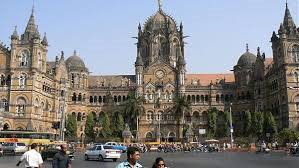
The Chhatrapati Shivaji railway station, Mumbai (or is it Bombay?)

Even before the rise of Hindu nationalism, there had already been moves towards changing placenames in India, to make them sound less like attempts by English speakers to pronounce the names. Thus, Bangalore became Bengaluru, Calicut became Kozhikode, and Bulsar became Valsad.
Thus far, reaction in India to the Independent‘s Mumbai/Bombay decision has not been overly hostile – although it has been critical. One critic tweeted:
Might be better if @amolrajan took a strong line against actual Hindu extremism rather than just the name of city
…while another commented:
“We shall henceforth refer to Mumbai as Bombay” – says The Independent, a newspaper printed in Londonium in Britannia.
Rajan’s idea that calling Mumbai by a name decided for it by ultra-nationalists effectively helps to do their work for them has essentially been the same argument for calling Aung San Suu Kyi’s country, Burma. Since 1989 the military dictatorship in charge of the place has insisted that the country’s proper name is Myanmar, and broadcasters and journalists are increasingly using that name instead of Burma. Whether they will continue to do so could well depend on how the junta copes with the ongoing fallout from Suu Kyi’s NLD’s stunning victory in last autumn’s parliamentary elections.

However, this argument doesn’t always win through: nationalism was also behind the 1972 announcement by the government in Colombo that their nation of Ceylon would henceforth be known as Sri Lanka, and even in the dark days of former president Rajapaksa’s bloody crushing of the LTTE in 2009 nobody thought of calling the country anything other than Sri Lanka. Similarly, an ever-confident People’s Republic of China has successfully got the rest of the world to adapt to changes in placenames in that country: thus, virtually every writer and commentator freely refers to Beijing, Guangzhou and Nanjing, rather than Peking, Canton, and Nanking. For the same reason, for all the valid criticism of the excesses of the Turkish state, nobody thinks to call the cities of Ankara, Izmir, and Istanbul by their previous names of Angora, Smyrna, and Constantinople.

It is not just in developing countries that drives to change placenames can take place. In Australia, for example, people are increasingly referring to the enormous sandstone monolith near Alice Springs by its Aboriginal name of Uluru, instead of the more colonial-sounding term Ayers Rock. Similarly, more people are referring to Australia’s nearest neighbour as Aotearoa New Zealand – giving reference to that country’s Maori name (which in English means “Land of the Long White Cloud”).

Then again, placenames are forms of symbols, and when they are changed it can have an impact on the symbolism. The Derry/Londonderry naming dispute is a classic case in point, and I know it has been given a fair airing on Slugger on several occasions already, but it is worth looking at again. Put simply, Unionists prefer the term Londonderry and nationalists Derry, both because of the symbolism of the British connection implied in the “London” part of the name. The local authority’s name was altered to Derry City Council in 1984, but the dispute is continuing, and the chances are that the name Londonderry will continue to be used by Unionists even if the Queen can be persuaded to change the city’s royal charter.

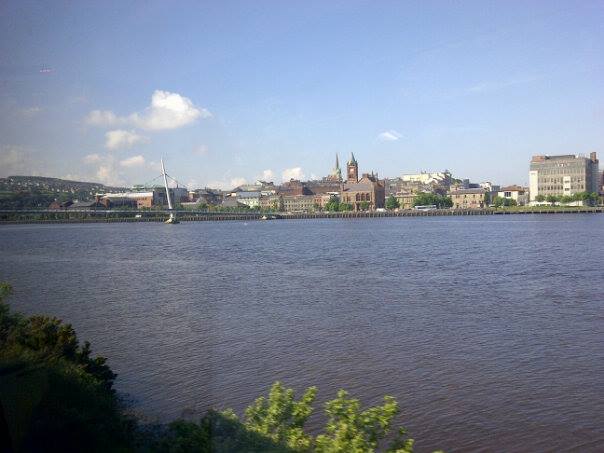
A view of Derry (or is it Londonderry?)

Ultimately, when placenames are changed for whatever reason, the evidence from India, China, Sri Lanka, Turkey and beyond is that most people get used to the new name without too much difficulty. It does not always turn out that way, however, but it’s a fairly safe bet that all of Derry’s names are more likely to survive than that of Bombay.

Friday, October 16, 2015

Dictionnaire topographique

http://www.onomastique.asso.fr/articles.php?lng=fr&pg=209&mnuid=33&tconfig=0


Actualités 2015 de l'équipe du projet "Dictionnaire topographique de la France"
Mise à disposition de nouveaux dictionnaires topographiques
Ceux-ci sont proposés en version html, xml, doc et image, à partir d’une carte interactive de la France >>> 

 
Vous y trouverez quatre nouveaux dictionnaires de la Collection Dictionnaires topographiques de la France :
Et deux dictionnaires hors collection apparentés :
La programmation 2015 prévoit également l’enregistrement et le traitement du dictionnaire topographique des Hautes-Alpes.

Un onglet « Liens » donne accès à un premier ensemble de ressources liées au projet.

Un formulaire de contact a été mis à disposition pour toute demande relative au projet.

Date de création : 09/10/2015 18:57
Catégorie : Documentation - Dictionnaire topographique

Wednesday, May 13, 2015

2015 International Symposium on Place Names

http://conferences.ufs.ac.za/default.aspx?DCode=732

2015 International Symposium on Place Names:


“Place names, diversity and heritage”

Organised by the IGU Commission/ICA Working Group on Toponymy and the Unit for Language Facilitation and Empowerment, UFS

Protea Hotel, Clarens, Free State Province, South Africa, 16-17 September 2015


 Description: Home page img Tags: Home page img

Announcement

We are proud to announce the next symposium on place names in Clarens, Free State Province, South Africa, 17-18 September 2015, jointly organised by the IGU Commission/ICA Working Group on Toponymy and the Unit for Language Facilitation and Empowerment, University of the Free State (UFS).


Topic of the symposium: “Place names, diversity and heritage”


Spaces obtain meaning because of the role they play in human events or conceptualisations of the world. The descriptions and interpretations of these spaces are intertwined with human objectives and values. These could be determined by prevalent ideologies, whether political, social or cultural. As such, names are artefacts of social, political, cultural and demographic discourses. They importantly also serve as a reflection of identity, both cultural and collective, thereby denoting a range of diversities
Given that society is dynamic and the accompanying determining factors are also in flux, names are sometimes changed to reflect new realities. In other instances they are left unchanged. Nevertheless, toponymic landscapes generally capture to a lesser or greater extent the diversity of their context and also largely relate strongly to the heritage of name givers. For many people changes in place names have a bearing on these aspects. One therefore often finds that orchestrated place name changes become an instrument of legitimation for one section of a society and are therefore being contested by another section of the society. This prompts questions about the management of place names in diverse societies and the role of heritage associated with place names.
This symposium follows on the very recent one held in Rome, Italy (17 – 18 November 2014); and will follow shortly on the ones in Moscow and Rio de Janeiro, both in August 2015. It seeks to specifically investigate the relation between place names, diversity and heritage.
Potential subtopics
This is simply a list of suggestions; papers relating to place names of any kind are welcomed:
  • functions of place names on maps
  • rendering of place names on maps
  • names placement on maps
  • principles for creating new place names
  • place names as expression of time- or space-related identity
  • place name/feature relations
  • motives for place naming
  • place names and administration
  • place names and transportation
  • place names in the cyber world
  • social dimensions of place names
  • historical dimension of place names
  • authenticity and place names
  • place names management
  • place names, multilingualism and language visibility
  • principles for solving place-name conflicts
Those interested in presenting papers or posters are invited to send their abstracts (maximum 400 words in English or Afrikaans) to kongresetfb@ufs.ac.za by 17 July 2015.


Scientific council and paper selection committee
 Theodorus du Plessis (South Africa): Director, Unit for Language Facilitation and Empowerment, UFS

 Peter E. Raper (South Africa): Member of the Steering Board, Joint IGU/ICA Commission/Working Group on Toponymy; Research Fellow, Unit for Language Facilitation and Empowerment, UFS

 Cosimo Palagiano (Italy): IGU Chair, Joint IGU/ICA Commission/Working Group on Toponymy

 Paulo Márcio Leal de Menezes (Brazil): ICA Chair, Joint IGU/ICA Commission/Working Group on Toponymy

 Peter Jordan (Austria): Member of the Steering Board, Joint IGU/ICA Commission/Working Group on Toponymy

 Johan Lubbe (South Africa): Research Fellow, Unit for Language Facilitation and Empowerment, UFS

 Johan Moll (South Africa): Research Fellow, Unit for Language Facilitation and Empowerment, UFS


Keynote
Peter E. Raper (South Africa): Member of the Steering Board, Joint IGU/ICA Commission/Working Group on Toponymy; Research Fellow, Unit for Language Facilitation and Empowerment, UFS

Important dates
  • February 2015: First call for papers
  • May 2015: Second call for papers
  • 17 July 2015: Deadline for submission of abstracts (maximum 400 words)
  • 14 August 2015: Registrations close

Languages of the symposium
English and Afrikaans (interpreting to English will be provided)


Conference fees
To be announced


Conference proceedings
A selection of the papers will be published as conference proceedings in a special edition of the Nomina Africa, accredited journal of the Names Society of Southern Africa.


Queries
Please send abstracts or any enquiries to kongresetfb@ufs.ac.za.


More about the venue
Clarens is a picturesque little town in the foothills of the Maluti Mountains. The symposium will be hosted at theProtea Hotel but there is a range of accommodation alternatives available in town and everything is within walking distance of each other.
The conference fee does not include transport. Clarens is approximately 300km from Johannesburg, Bloemfontein and Durban (3 to 4 hours of driving away). There is no public transport, but delegates could rent a car, shuttle or chauffeur service. Maluti Footprints and Tours provides shuttle services as well as an assortment of tours.
International delegates – information about visa requirements, exchange rates, maps, and so forth
Air travel: Most of the world’s airlines fly to South Africa, mostly directly to the O.R. Tambo International airport at Johannesburg.

Monday, June 9, 2014

Place-Names and Settlement History: Aspects of Selected Topographical Elements on the Continent and in England


Recently, I have stumbled upon a very interesting work - master thesis of Susan Hilsberg from the University of Leipzig:

Thereto she created the website dedicated to her dissertation and that amazing problematics: http://place-names.co.uk/

I quote from the first page plus copy-paste her great maps:


Concerning the early settlement of England by Germanic tribes  there are three questions of great importance:
1. Who were these Germanic settlers exactly? (Angles? Saxons? Jutes?)
2. Where was their continental starting point? and
3. When did they arrive?
Fig. 1: Anglo-Saxon Settlers (BBC.co.uk)
The usual starting point for trying to answer these questions is the wide-spread and popular view based on the traditions of the Venerable Bede and his Historia Ecclesiastica Gentis Anglorum (731). In this Bede gives the famous year of ad 449 for the arrival of the early Germanic settlers of England. According to Bede these early settlers came from three powerful tribes—the Saxons, the Angles, and the Jutes (Book I, chapters 14-6). He further provides detailed information as to their continental homelands and their settlement in England. From this it has emerged that the early settlers originated from        the Jutland peninsula, i.e. the area of modern                    Schleswig-Holstein and Denmark. Since “[...] this is the only definite and comprehensive statement regarding the origin of the invaders which has come down to us [...]” (Chadwick 1924: 51), it seems natural that such a precise statement about an otherwise very obscure age is easily accepted by scholars. Thus, it has been widely acknowledged and also found its expression in several illustrations as in Fig.1 above.
Yet, when investigating Germanic place-names the picture of this movement towards England looks different. When checking the maps of Susan Hilsberg's master thesis there seems to be an obvious movement across the Channel between Northern France and England and not a movement across the North Sea…


Can place-names reveal a connection with settlement movements? Are they suitable for this type of investigation? Why is the focus on topographical elements in this dissertation?
These and further questions have been answered in the present work and can be downloaded here: http://place-names.co.uk/?page_id=20.

I liked this work a lot, it produces and presents maps revealing the interdependencies of toponymic systems between England and the continental Europe. We're aware that the oldest settlement names known, for example, in Denmark are the ones ending in -inge, -um, -løse, -lev and -sted. These name types have been used during various periods since the first century AD and until the beginning of the Viking Age. But often, it is also possible to date Danish place names according to whether the same type of names appear in areas conquered by Danish Vikings in England, called the Danelaw, and in Normandy. When Danish place names are found in these areas, the name types in question must have been used in Denmark at the same time. So, we may conclude that this topic had been worked out pretty well, but one-sidedly or partially. I know a lot of similar charts demonstrating Viking placenames in England, but I have never met a map showing their distribution in Denmark or Germany. I suppose it's not a problem to collect the oldest placenames of Danemark, I am even sure it has been already done, but I doupt if anybody has already mapped that kind of correlation between Danemark and England. Do you know any relevant works on it? Maybe there are any aspects to be highlighted for a narrow group of toponyms?
Please, enjoy classic maps on the theme: 


Well, a strongly appriciated topic. Thank you, Susan!!!