Monday, January 16, 2023

Paul Fabre (1935 - 2023)

 lien

Originaire de Nizas, le linguiste distingué que fut Paul Fabre, à l'Université Paul-Valéry de Montpellier, vient de tirer sa révérence.

Un érudit affable, originaire de Nizas, vient de disparaître à l’âge de 87 ans. En effet, le professeur émérite des Universités Paul Fabre fait partie de ces Alésiens dont les travaux de recherches témoignent d’une activité intellectuelle soutenue. Grammairien et maître de la chaire de philologie romane à l’Université Paul-Valéry de Montpellier, il a formé de nombreux étudiants aux subtilités et évolutions de la langue française depuis le Moyen-Âge. Tout au long de sa vie, il publiera de nombreux ouvrages spécialisés sur la sémantique, la grammaire occitane ancienne, l’origine des noms de lieux et de personnes, ainsi que plusieurs romans à caractère régionaliste.


Friday, January 13, 2023

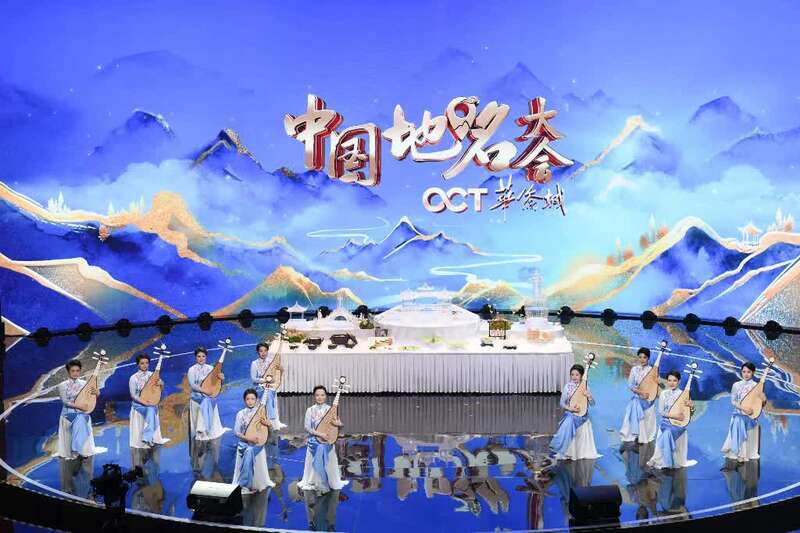
Third Season of "Chinese Place Names Conference" Show is Back

link 


The Ministry of Civil Affairs and China Media Group have launched the third season of "China Place Names Conference" in an effort to promote China's superb place name culture. It will begin airing on CCTV-4 on December 17th at 17:30 on every Saturday and Sunday.


The program builds on the strengths of the previous two seasons by analyzing the Chinese wisdom concealed in place names, using knowledge of place names as the carrier to deeply explore the main theme of "seeing culture from place names and seeing China from culture," focusing on helping the audience understand the essence of Chinese culture, perceive the rich connotation of place name stories, and experience the real, three-dimensional world around them, exhibiting the self-assurance of Chinese culture virtually while showcasing the rich history of Chinese place names culture and socialist fundamental values.


The cultural variety performance "China Place Names Conference" is well-liked by the audience, inclusive of all people, and committed to sustainable growth. The third season included new ideas and enhanced the presentation, content, and competition structure of the show. In terms of the competition system, the combination of team battles and individual battles enables players to obtain individual victories through individual efforts in addition to team honors, giving each player a greater sense of contribution and value. 

In terms of content, this season will concentrate on the understanding of place names that the audience is familiar with but not fully adept at, in order to pique their interest and encourage participation, enhance the output quality of place name knowledge, and fully illustrate the positive pattern of "emphasizing science and emphasizing practicality" in the current development of place name culture in China. Regarding presentation techniques, it is conveyed through a short film set in a very aesthetically striking setting that also extracts information on place names' cultural, geographic, and historical contexts, showcasing the grandeur and beauty of China.

To create a stunning visual impression and a novel approach to question framing, the program also employs a variety of techniques such as XR technology, fascinating animations, interactive objects, and special product tasting.

Use the place name as a guide to help you find your route; mark the location and keep an eye on the future. The third season of "China Place Names Conference" explores the historical changes, enduring cultural influences, and contemporary design motifs that have influenced Chinese place names in various ways. It also acknowledges the listeners' journeys that place names take them on as they visit far-off cultural locales.

Sunday, January 8, 2023

Etymology of Field Names on Open Street Map


Adding the origin of fieldnames to OpenStreetMap is a great opportunity for people interested in local history to record the history of their place in an easily accessible place and helps other people understand some of the more obscure fieldnames. Many thanks to all the people who have already tirelessly added fieldnames to OpenStreetMap!!! 00:00 Introduction 03:05 Naming by shape 04:05 Naming by size 04:47 Naming by crop or farm animal 09:25 Former owners' names 11:17 Naming after man made structures (lime kilns, castles, graveyards...) 29:30 Natural features (waterbodies, wildlife, changes in altitude...)

Conférence « Artus de Bretagne : onomastique et littérature »

 lien

Lundi 16 janvier 2023 à 17 h
Archives nationales

« Artus de Bretagne : onomastique et littérature »

par Christine Ferlampin-Acher,
membre honoraire de l’IUF et professeur de langue et littérature françaises du Moyen Âge

(Université de Rennes 2, CELLAM)

À partir d’un roman arthurien tardif, Artus de Bretagne, composé vers 1300, seront envisagées quelques-unes des problématiques que posent l’édition de textes romanesques médiévaux et leur étude littéraire : instabilité des traditions manuscrites, intertextualité complexe, réseau de senefiance, datation et attribution de textes anonymes non datés, questions de réception (des manuscrits à la Collection de romans de chevalerie d’Alfred Delvau). La conférence proposera un bilan autour de quelques exemples ayant déjà donné lieu à publication.

***

Spécialiste du roman arthurien tardif, Christine Ferlampin-Acher a mené des recherches sur Perceforest et sur Artus de Bretagne et dirigé le projet LATE, « Littérature Arthurienne Tardive en Europe » (1270-1530). Elle a co-organisé à Rennes un séminaire sur l’onomastique littéraire médiévale : Par le non conuist an l’ome. Études d’onomastique littéraire médiévale, éd. C. Ferlampin-Acher, F. Pomel et E. Egedi-Kovàcs (dir.), Budapest, 2021 et en ligne : http://byzantium.eotvos.elte.hu/wp-content/uploads/Onomastique.pdf

***

Les conférences se tiennent aux Archives nationales, site de Paris :

CARAN — salle d’albâtre
11 rue des Quatre-Fils
75003 Paris

Accès libre et gratuit dans la limite des places disponibles.

Found in translation: the Welsh place-names of the Cambrian Mountains

 link

online talk by Dylan Foster Evans !!!

Names of hills, valleys and scattered signs of human presence give layers of insight into the people who've lived and worked the uplands


When and where

Date and time

Location

Online

About this event

The apparent emptiness of the Cambrian Mountains today belies a long and deep history of human settlement and activity. Every hill, common, stream, track, standing stone and cairn has a name, not to mention many fields and the more recent features of chapels, mines, farms (standing and ruined). To non-Welsh speakers, these names - hard to pronounce and so hard to remember - are more likely to hinder an understanding of the landscape than help it. To those who can follow the Welsh descriptions and decipher the old names, however, they act as an encyclopoedia of information about the events, imaginings and relationships of the people who conferred the names on the landscape.

In this webinar, Dylan Foster Evans, the Chair of the Welsh Place-Name Society, will discuss what we can learn from the place-names of the Cambrians about the languages, landscape, history and culture of the country. 


Thursday, January 5, 2023

Modeling Historical Place Names


talk for Methods In Sinology Ruth Mostern @PittTweet "Modeling Historical Place Names: The Digital Gazetteer of the Song Dynasty and the World Historical Gazetteer" Thank you Lu Wang for Chairing

Coca Cola: the Most Lawed Name


Coca Cola- what a name! We talk about Coca Cola's iconic wordmark/s.

49è Col·loqui de la Societat d’Onomàstica (a Eivissa i a Formentera)

 link

Organitzat per la Societat d’Onomàstica amb la col·laboració de: 

- Oficina d’Onomàstica (Secció Filològica de l’Institut d’Estudis Catalans). 

- Institut d’Estudis Eivissencs i Consell Insular d’Eivissa. 

- Obra Cultural Balear de Formentera i Consell Insular de Formentera. 

- Gabinet d’Onomàstica de la Universitat de les Illes Balears.


El darrer col·loqui a Eivissa organitzat per la Societat d’Onomàstica fou el 1999. Aquest col·loqui va ajudar a impulsar l’estudi de l’onomàstica a les Pitiüses. Tant a Eivissa com a Formentera hi ha estudiosos que han treballat l’onomàstica, especialment fent reculls de toponímia, però no hi ha un pla de l’Administració que planifiqui la seva recollida sistemàtica i organitzada, com si que es fa en altres zones. Aquest col·loqui pretén: 

a) Fer conèixer i incentivar la recerca dels noms de lloc i persona a Eivissa i a Formentera. 

b) Promoure l’estudi de l’onomàstica i del seu valor com a patrimoni immaterial. 


Temes 

Toponímia costanera i / o insular. 


Comunicacions 

Les propostes de comunicació al Col·loqui s’han de fer arribar per correu electrònic des d’ara i fins al 15 de març de 2023 a la Secretaria del Col·loqui (sdo2023EivissaFormentera@onomastica.cat). Els interessats hi han d’indicar les seves dades personals (nom i cognoms, adreça de correu electrònic i tel. de contacte) i enviar un text amb el títol i el resum de la comunicació d’una extensió entre 500 i 2.000 caràcters. 

Per a la posterior publicació de les actes del col·loqui, el text definitiu haurà de tenir una extensió màxima de 35.000 caràcters amb espais. I s’haurà d’ajustar als criteris editorials que apareixen en aquest enllaç https://www.onomastica.cat/wp-content/uploads/Onomastica-criteris-editorials.pdf . 


Coordinació 

Mar Batlle, Enric Ribes i Marí, Pere Navarro i Josep Ramon Santiago Peset. 


Comitè científic 

Maribel Guardiola (Universitat d’Alacant), 

Javier Giralt (Universitat de Saragossa) i Josep Ramon Santiago Peset (Universitat de les Illes Balears). 


Tuesday, January 3, 2023

Sektion "Namen in Krisenzeiten / Namenkrisen / Namen in der Krise" (XV. IVG-Kongress 2025)

 PDF + Kongress

Organisatorisches Einreichung: 

ao. Univ.-Prof. Mag. Dr. Peter Ernst (Wien), Assoc. Prof. Dr. Michael Prinz (Uppsala), PD Dr. habil. Barbara Aehnlich (Bremen), Dr. Christian Zschieschang (Cottbus) 

Thema 

Wie lässt sich der Begriff ‘Krise’ sinnvoll konzeptualisieren und onomastisch breit nutzbar machen? Ganz allgemein wird unter einer Krise eine eskalatorische Entwicklung individueller oder kollektiver Natur verstanden, die unterschiedlichste Lebensbereiche und Sprachgebrauchsdomänen betreffen kann. Das Spektrum reicht dabei von persönlichen Lebenskrisen und Beziehungskrisen bis hin zu (politisch, wirtschaftlich oder sozial bedingten) gesellschaftlichen Krisen. Solche Krisen eröffnen in der Regel unterschiedliche Handlungsoptionen, die entweder zu einer weiteren Verschärfung (bis hin zur Katastrophe) führen können oder Chancen zur bewussten Deeskalation und letztlich zur Lösung von Konflikten bieten. 

Das onomastische Potenzial des Themas ist dabei ein zweifaches: Zum einen stellt sich die Frage, wie bestimmte Krisen sich auf onymische Einheiten und/oder Namensysteme auswirken: Auf welche Art und in welchem Umfang reflektieren Namen krisenhafte Entwicklungen und stellen gewissermaßen sedimentiertes Wissen über historische Krisen dar? Wie reagiert das Namensystem dynamisch auf laufende Krisen? Zugleich können Namen aber natürlich auch für eine solche Dynamik konstitutiv sein. Namen besitzen ein inhärentes Konfliktpotenzial, welches für die Entstehung und die Entwicklung einer Krise wesentlich sein kann. So kann etwa in einer Sprechergemeinschaft eine aus einem ethnischen Konflikt resultierende Krise zur Vermeidung ethnisch markierter Rufnamen oder zum freiwilligen Familiennamenwechsel führen. Gleichzeitig kann aber die aus politischen Machtstrukturen resultierende fehlende Sichtbarkeit von z.B. minderheitssprachlichen Orts- und Straßennamen im öffentlichen Raum auch ein Katalysator für die Entwicklung einer Krise sein. 

Angesichts der Vielgestaltigkeit des Phänomens sind unterschiedliche onomastische Themenfelder für den IVG-Kongress denkbar: 

a) Persönliche Krisen: z.B. psychische Lebenskrisen (aufgrund von Schicksalsschlägen, Krankheiten o.ä.), Beziehungskrisen, familiäre Krisen (Beispielthemen: Namenswechsel aufgrund von Identitätskrisen [vgl. Schmidt-Jüngst 2020], Traumata, Flucht oder Vertreibung; Beziehungskrisen und Kosenamen; Pränatalname [vgl. Zastrow 2021] und Fehlgeburt / Benennung von “Sternenkindern”; Pubertät als Krise)

b) Politische und ökonomische Krisen: z.B. Corona als Personen- und Produktname; Wirtschaftskrise der 90er und die Vergabe ostdeutscher Personennamen; Religiös motivierte Diskriminierung aufgrund des Namens; Rufnamen und Flucht; Kriege als Auslöser von Namenwechsel; Namenkonflikte (Eller et al. 2008); Globalisierung als Krise in der Personennamengebung; Schandnamen

c) Ökologische Krisen: z.B. onymisches Greenwashing und Produktnamen; “Absturz” des Vornamens Greta seit 2020; der Spiegel ökologischen Wandels in den geografischen Namen  

d) Epistemische Krisen: Etablierte Wissensbestände (z.B. religiöse oder wissenschaftliche) können durch die Konfrontation mit neuem Wissen eine Krise auslösen, die dann z.B. zu einer religiösen Häresie oder einer wissenschaftlichen Revolution im Stile eines Paradigmenwechsels führen (Beispielthemen: Konfessionelle Namengebung; Humanistennamen (vgl. Kroiß 2021); Namen wissenschaftlicher Theorien)

e) Namenforschung in der Krise: In der Onomastik zeigen sich ebenfalls Krisen. So ist ein starker Rückgang der Ehrenamtlichen zur Erhebung der Namen zu verzeichnen und es stellt sich die Frage, wie der Generationenwechsel in der traditionellen Orts- und Flurnamenforschung vollzogen werden kann. Die toponomastische Forschung wird vor allem im deutschsprachigen Raum kaum noch gefördert und ist kaum noch Bestandteil von germanistischen Lehrstühlen und Professuren (vgl. Prinz 2021). Hier stellt sich die Frage, wie mit dieser Verdrängung aus dem universitären Kontext umzugehen ist.

Für die Sektion sind zwei Tagungstage vorgesehen. Eine Liste potenzieller Referent*innen, die angefragt werden sollen, hängt an, wobei ein Auswahlverfahren anhand einer Themen- und Abstracteinreichung durch die Sektionsverantwortlichen geplant ist.

Mögliche Referent*innen 

1. Peter Ernst (Wien) 

2. Michael Prinz (Uppsala) 

3. Christian Zschieschang (Cottbus) 

4. Barbara Aehnlich (Bremen) 

5. Daniel Kroiß (Mainz) 

6. Miriam Lind (Mainz) 

7. Inga Siegfried-Schupp (Zürich) 

8. Peter Jordan (Wien) / Ross Purves (Zürich) 

9. Anne Zastrow (Rostock) 

10. Martin Graf (Zürich) 

11. Simone Berchtold (Zürich) 

12. Elwys De Stefani (Leuven) / Susanne Günthner / Pepe Droste (Münster) 

13. Michelle Waldispühl (Göteborg) 

14. Volker Kohlheim (Bayreuth) 

15. Martina Heer (Bern) 

16. Erika Windberger-Heidenkummer (Graz) 

17. Helen Christen (Fribourg) 

18. Angela Bergermayer (Wien) 

19. Thomas Lindner (Salzburg) 

20. Márta Müller (Budapest) 

21. Claudia Posch (Innsbruck) 

22. Gerhard Rampl (Innsbruck) 

23. Hubert Bergmann (Wien) 

24. Veronika Štěpánová (Prag)


Literatur 

Eller, Nicole, Stefan Hackl & Marek Ľupták (2008): Namen und ihr Konfliktpotential im europäischen Kontext (Regensburger Studien zur Namenforschung 4). Regensburg: edition vulpes. 

Kroiß, Daniel (2021): Humanistennamen. Entstehung, Struktur und Verbreitung latinisierter und gräzisierter Familiennamen (Lingua Academica 6). Berlin, Boston: De Gruyter. 

Prinz, Michael (2021): Germanistische Toponomastik gestern und heute: Eine forschungsgeschichtliche Annäherung. In: Kathrin Dräger, Rita Heuser & Michael Prinz (Hrsg.), Toponyme: Standortbestimmung und Perspektiven (Reihe Germanistische Linguistik 326), Berlin, Boston: De Gruyter, 3-28. 

Schmidt-Jüngst, Miriam (2020): Namenwechsel. Die soziale Funktion von Vornamen im Transitionsprozess transgeschlechtlicher Personen (Empirische Linguistik 14). Berlin, Boston: De Gruyter. 

Zastrow, Anne (2021): Böhnchen, Fritzi, Rumpel – Linguistische Aspekte von Pränatalnamen. In: Namenkundliche Informationen 113, 301-322


Monday, January 2, 2023

ХХ Всеукраїнська (з міжнародною участю) ономастична конференція

(ukrainian / english)                                       

Міністерство освіти і науки України

Інститут української мови НАН України

Українська ономастична комісія

Житомирський державний університет імені Івана Франка

Навчально-науковий інститут філології та журналістики

Кафедра української мови та методики її навчання


ІНФОРМАЦІЙНИЙ ЛИСТ


18–19 травня 2023 р. на базі навчально-наукового інституту філології Житомирського державного університету імені Івана Франка в дистанційному форматі (на платформі Zoom) відбудеться ХХ Всеукраїнська (з міжнародною участю) ономастична конференція, присвячена 90-річчю від дня народження члена-кореспондента НАН України Василя Васильовича Німчука.

Передбачено такий порядок роботи конференції: 18 травня з 10.00 до 14.00 – перше пленарне засідання, з 15.30 до 18.30 – секційні засідання; 19 травня з 10.00 до 13.00 – завершальне пленарне засідання, з 13.30 до 14.30 – засідання Української ономастичної комісії. Програму буде надіслано наприкінці березня.

Робочі мови конференції українська та інші слов’янські, англійська.

Заявки на участь у конференції просимо подати до 1 лютого 2023 року на адресу: lesjajashhuk@ukr.net.

Статтю можна надіслати до 10 травня 2023 року на адресу: h_hrymashevych@ukr.net.

Надіслані матеріали буде опубліковано у Віснику Житомирського державного університету імені Івана Франка. Філологічні науки. Випуск 100.

Адреса оргкомітету: 10008 м. Житомир, вул. Велика Бердичівська, 40, навчально-науковий інститут філології та журналістики, кафедра української мови та методики її навчання.

Координатори конференції: Гримашевич Галина Іванівна, тел. 0974936742, e-mail: h_hrymashevych@ukr.net; Вербич Святослав Олексійович, тел. 0954253216, e-mail: sviatoverb@ukr.net; Ящук Леся Валеріївна, тел. 0975074148, e-mail: lesjajashhuk@ukr.net.


З повагою –

Оргкомітет конференції


On May 18-19, 2023, the XX All-Ukrainian and International Onomastic Conference will be held at the Institute of Philology of Ivan Franko Zhytomyr State University in a remote format (Zoom). This conference will be dedicated to the 90th anniversary of the Corresponding Member of the Ukrainian National Academy of Sciences Vasyl Nimchuk 

The meeting of the Ukrainian Onomastic Commission will take place on the 19th May 2023. The program will be sent at the end of March.

The working languages of the conference are Ukrainian and other Slavic languages, English.

Applications should be submitted by February 1, 2023 to: lesjajashhuk@ukr.net. The full article can be sent up to May 10, 2023 to: h_hrymashevych@ukr.net. The submitted materials will be published in the Bulletin of Ivan Franko Zhytomyr State University (Philological Sciences. Vol. 100).

Sunday, January 1, 2023

Onomastic Highlights 2022

 Just like last four years (201920182020, 2021), I decided to sum up the most interesting onomastic highlights of the outgoing year. Fisrt, I've counted together all visits on my blog e-Onomastics and ICOS Website, all reactions on ICOS Facebook and all engagements on ICOS Twitter. Thereto, I've added comments and likes. Then, I divided all post into categories and made an overall rating. Additionally, we have to count views on the new ICOS YouTube Channel what is directly related to the initiative "Onomastics Lectures Online"

Let's have a look how rich the year of 2022 was (within brackets you may see ranking points. They reflect the online impact, which the corresponding events got in social media) :


TOP 15 Onomastic Events

(1.367) Online symposium "People’s Names: Identities and Inequalities"

(865)    46th Congress of Limburg Dialectal and Onomastic Association

(788)    American Name Society Annual Meeting 2022

(736)    IV Jornadas Antroponomásticas

(715)   Tagungen der Gesellschaft für Namenforschung und des ABÖN

(510)   Ecole thématique (Se)NOMMER : NOMMER, ÊTRE NOMMÉ-E, SE NOMMER

(455)   VII Xornada de Onomástica Galega

(452)   56th Annual Meeting of the Canadian Society for the Study of Names

(450)   V межд. конференция «Этнолингвистика. Ономастика. Этимология»

(441)   22nd Slovak Onomastic Conference

(398)   47è Col·loqui de la Societat d’Onomàstica

(381)   XXVth International Onomastica & Letteratura Symposium

(347)   SNSBI Spring Conference 2022

(322)   30th Anthroponymy and Toponymy Conference: Past, Present and Future

(297)   XIXe Colloque d'Onomastique à Tours


TOP 6 Toponymic Events


(213)    SPNS Autumn Conference 2022


Anniversaries

(1.010) e-Onomastics 10 years old

(373)    Prof.Dieter Kremer 80th birthday

(287)    Folia Onomastica Croatica's 30th anniversary


TOP 13 Books and Proceedings

(1.830) Antroponimia wiernych parafii prawosławnych na Kujawach Wschodnich i w ziemi dobrzyńskiej wII połowie XIX i w początkach XX wieku

(871) The Politics of Place Naming, Naming the World

(748) Proceedings ICONN 5

(577) Kleiner deutscher Familiennamenatlas

(506) Naming and Mapping the Gods in the Ancient Mediterranean

(431) Personal Names: an introduction to Brazilian anthroponymy

(387) Encountering Toponymic Geopolitics

(368) Onomastic investigations from a cognitive approach

(318) Koloniale und postkoloniale Mikrotoponyme

(289) Personal Names in a Medieval Context

(276) Luzerner Namenbuch 4

(202) From Etymology to Landscape — Onomastics for the 21st Century

(92) The Referential Mechanism of Proper Names


TOP 12 new Journals' issues 

(1.302) Onomástica desde América Latina 6

(733) ONOMA 56

(349) ACTA ONOMASTICA 63

(343) MONDONOMO Articles (online journal)

(321) Rivista internazionale di onomastica letteraria 2022

(310) Onomástica desde América Latina 5

(296) Nordic Journal of Socio-Onomastics 2

(278) Studies in Indian Place Names 41

(242) Noms 18

(---) Onomastica 66 (published in December)

(---) Onomàstica 8 / Anuari de la Societat d’Onomàstica (published in December)


Online Media, Data, App/Software

(3.062) MONDONOMO Names Database

(2.641) ICOS YouTube Channel

(2.585) Onomastics Online

(1.709) Publications of English Place-Name Society Available Online

(729) Video by Dr Jane Pilcher: Why does the pronunciation of students’ names matter?

(673) ICOS page “Onomastic Research Worldwide

(633) Euskal Corpus Onomastikoa (ECO) Database

(495) Onomastic Highlights 2021

(443) Online Talk ‘Family names in the North of Ireland’

(356) App "Visor Toponímico Mexicano"

(213) An index to personal names in English place-names available online

(94) American Name Society YouTube Channel

(94) Onomastica Canadiana Twitter


Onomastics Online Lectures

(3.659) Onomastics Online 1

(2.870) Onomastics Online 2

(2.000) Onomastics Online 6

 (1.900) Onomastics Online 4

(1.739) Onomastics Online 5

(1.330) Onomastics Online 3

(1.143) Onomastics Online 8

(1.059) Onomastics Online 7


What's New? 

(1.421) Surname Atlas of German-speaking Switzerland Project

(412) "Proper Names in the Bibles" Project by MONDONOMO

(244) Nouvelle rédactrice en chef francophone de la revue Onomastica Canadiana

(251) New Anglophone Editor in Chief of Onomastica Canadiana Journal

(230) Médaille du Département pour le toponymiste Stéphane Gendron 

(44) Project "The Power of Labels: The Meaning and Use of Names for Identities and Conditions"


Friends and colleagues we lost in 2022 (no ranking, chronological order)

Gabriele Rodriguez (1961-2022), Namenberatungsstelle, Leipzig University, Germany

Aleksander Wilkoń (1935-2022), State Higher Vocational School in Tarnow, Poland

Wolfgang P. Ahrens (1940-2022), former CSSN President, ICOS member, Canada

Ludvig Selimski (1939-2022), University of Ss. Cyril and Methodius in Trnava, Bulgaria

Jan H. Segers (1942-2022), Flemish toponymist, founder of the Limburgian Dialect and Name Society, Belgium

Riemer Reinsma (1941-2022), founding member of Joint ICA/IGU Commission on Toponymy, The Netherlands

Volkmar Hellfritzsch (1935-2022), Abteilung Deutsch-Slavische Namenforschung, Leipzig University, Germany

Michael Falk (1931-2022), CSSN member, Onomastica Canadiana contributor, Canada

Bertie Neethling (1947-2022), NSSA member, University of the Western Cape, South Africa

Elixio Rivas (1925-2022), Co-Founder of the Galician Association of Onomastics, Spain

Erika Weber (1934-2022), Mitarbeiterin der Leipziger Namenforschung, Germany


Most expected events 2023

(862) 'Names and Naming' Oxford Medieval Graduate Conference 2023

(818) Seminar “The Evolution of Shakespeare’s Names on Screen, Stage, and Page

(744) American Name Society Annual Meeting 2023

(491) 23rd International and Nationwide Conference on Onomastics 2023

(450) 50th NORNA-symposium 2023

(415) "Namen und Politik" Tagung 2023

(367) 8th Panhellenic Onomastic Congress

(325) Workshop “Dis/continuity in the representation of gender in names across languages” 2023

(292) 57th Annual Meeting of the Canadian Society for the Study of Names

(106) NITE 7: Names In The Economy 7 (2023)